- Home
- About Us
- Products
- Gaskets
- Braided Packing
- Graphite Packing
- Aramid Packing
- PTFE Packing
- Graphite PTFE Packing
- Carbon Fiber Packing
- Asbsetos Packing
- Ceramic Packing
- Fiberglass Packing
- Acrylic Packing
- Cotton Packing
- Injectable Sealant
- Synthetic Fiber Packing
- Vegetable Fiber Packing
- Mineral Fiber Packing
- Molded Packing Ring
- Die-formed Graphite Ring
- Compression Sheets
- Sealing Materials
- Sealing Machines
- Sealing Tools
- Insulation Products
- PTFE
- Metallic Gaskets
- Fep
- PFA
- News
- Download
- Send Inquiry
- Contact Us

Find Customized Braided Packing Solutions from a Reliable China Manufacturer
Understanding the Essential Role of Industrial Sealing Solutions
In the demanding world of industrial fluid containment and motion control, the integrity of a system often hinges on the smallest components. One such critical component, known for its versatility and reliability, is braided packing. This engineered sealing material is a mainstay across countless applications, from pumps and valves in chemical processing plants to agitators and mixers in food & beverage production. Unlike single-use seals, braided packings are designed to be adjustable and durable, forming a dynamic seal that accommodates shaft movement and minor misalignments. Their effectiveness lies in their construction: multiple yarns are meticulously braided over a core or interwoven to create a dense, cohesive structure. This design allows for controlled lubrication, effective heat dissipation, and remarkable resilience under pressure. For engineers and maintenance professionals, selecting the correct braided packing is not a trivial task; it is a calculated decision that impacts operational efficiency, safety, and total cost of ownership. The right packing minimizes leakage, reduces maintenance frequency, and extends the life of rotating equipment. This guide delves deep into the technical specifications, material science, and application best practices that define high-performance braided packings, providing the detailed information necessary for making an informed specification.
Detailed Technical Specifications and Performance Data
The performance of any braided packing is a direct result of its material composition and physical construction. To specify the correct product, one must analyze its key parameters against the operating conditions of the application. Below are the critical specifications presented for clarity and ease of comparison.
Core Material Properties
The choice of fiber and lubricant defines the packing's chemical compatibility, temperature range, and operational behavior.
- Fiber Materials: Aramid (e.g., Kevlar®), Carbon, Graphite Filament, PTFE (Teflon®), Fiberglass, Natural Fibers (e.g., flax, jute).
- Lubricants & Impregnations: PTFE dispersion, graphite powder, silicone grease, hydrocarbon-based lubricants, molybdenum disulfide.
- Temperature Range: Varies by material; PTFE packings typically operate from -100°F to +500°F (-73°C to +260°C), while graphite packings can excel up to 1200°F (650°C) in non-oxidizing atmospheres.
- pH Range: Specific to material; PTFE and graphite offer near-universal chemical resistance across a pH of 0-14, whereas aramid may be limited to specific acid/alkali ranges.
Physical and Mechanical Specifications
These dimensions and performance ratings are crucial for ensuring proper fit and function within the stuffing box.
| Specification | Typical Range / Value | Measurement Standard | Importance |
|---|---|---|---|
| Cross-Section (Size) | 1/8" to 1" (3mm to 25mm) | ASTM F721 | Must match stuffing box gland dimensions precisely for effective sealing. |
| Density | 70 - 110 lbs/ft³ (1.12 - 1.76 g/cm³) | ASTM D3776 | Higher density often indicates better sealing capability and longer life. |
| Tensile Strength | Varies widely; e.g., Aramid > 300,000 psi | ASTM D2256 | Indicates resistance to breaking during installation and operation. |
| Pressure Rating | Up to 3,000 psi (200 bar+) for high-performance styles | Application Specific | The maximum system pressure the packing can reliably contain. |
| Shaft Speed (PV Value) | Up to 300,000 psi-ft/min (High-Carbon/Graphite) | Calculated (Pressure x Velocity) | Determines suitability for high-speed rotational or reciprocating motion. |
Selecting the Right Braided Packing: An Application-Based Guide
Choosing a braided packing is not about finding the "best" material in absolute terms, but the *most suitable* one for a specific set of conditions. An incorrect selection can lead to rapid failure, excessive shaft wear, or dangerous leakage. The following matrix provides a guideline for common industrial scenarios.
| Application Environment | Primary Challenge | Recommended Packing Type | Key Rationale |
|---|---|---|---|
| Chemical Process Pumps (Acids, Caustics) | Chemical Attack, Corrosion | PTFE-Impregnated or Pure Graphite Filament | Superior chemical inertness across a wide pH spectrum. PTFE offers excellent lubricity; graphite handles higher temperatures. |
| High-Temperature Valves & Boiler Feed Pumps | Extreme Heat, Steam | Reinforced Graphite Foil or Carbon Fiber | Graphite maintains sealing integrity and self-lubricates at temperatures where organic materials would oxidize and fail. |
| Food, Beverage, & Pharmaceutical Equipment | FDA Compliance, Cleanliness, Non-Toxicity | White, FDA-Approved PTFE | PTFE is biologically inert, non-contaminating, and easily cleaned. White color helps identify contamination. |
| Marine & Offshore Saltwater Pumps | Saltwater Corrosion, Abrasion | Aramid Fiber Impregnated with PTFE or Synthetic Lubricant | Aramid provides exceptional strength and abrasion resistance, while the impregnation resists saltwater and lubricates. |
| General Service Water Pumps & Valves | Cost-Effectiveness, Reliability | Synthetic Fiber (e.g., PTFE/Graphite blend) or High-Quality Aramid | Offers an optimal balance of performance, durability, and price for non-aggressive media. |
Frequently Asked Questions (FAQ) About Braided Packing
Q: What is the fundamental difference between braided packing and a mechanical seal?
A: Braided packing is a sacrificial, adjustable sealing element made of fibrous material that fits into a stuffing box around a shaft. It requires controlled leakage for lubrication and cooling and is periodically tightened or replaced. A mechanical seal is a pre-engineered, precision device consisting of two flat faces (one rotating, one stationary) that create a near-leak-free seal. Packing is often chosen for its simplicity, cost-effectiveness on slower shafts, and ability to handle significant shaft movement. Mechanical seals are preferred for higher speeds, higher pressures, and applications where leakage must be absolutely minimized.
Q: How do I determine the correct size (cross-section) of packing for my equipment?
A: The correct size is dictated by the dimensions of your equipment's stuffing box. You must measure the internal diameter of the stuffing box (where the packing rings sit) and the diameter of the shaft (or stem) that passes through it. The formula is: (Stuffing Box ID - Shaft OD) / 2 = Packing Cross-Section. For example, a 2" ID box with a 1.5" shaft: (2 - 1.5)/2 = 0.25". You would need packing with a 1/4" cross-section. Always refer to the equipment manual for the manufacturer's specified size.
Q>Why does my new braided packing leak immediately after installation?
A: Some initial leakage is normal and often necessary for braided packing to function correctly. This leakage provides lubrication and cooling for the packing and shaft interface. The key is that it should be a slow drip (e.g., 1-2 drops per minute) rather than a stream. If leakage is excessive, it may be due to improper installation (such as incorrect ring staggering, dirty stuffing box, or damaged rings), insufficient gland follower tightening, or selecting a packing material incompatible with the fluid or conditions.
Q: How often should braided packing be tightened or replaced?
A: There is no universal schedule; it depends on the service conditions (speed, pressure, temperature, fluid abrasiveness). After initial installation, the packing should be checked and gently tightened after the first 24 hours of operation, as it will "break in" and seat itself. Subsequent maintenance is typically based on observed leakage. When adjustable tightening no longer controls leakage to an acceptable level, or if the gland follower is fully compressed, the packing should be replaced. High-performance materials like graphite or PTFE can last significantly longer than traditional fibers.
Q: Can braided packing be used on reciprocating (back-and-forth) shafts as well as rotating ones?
A: Yes, many braided packing styles are specifically designed for or perform well in reciprocating applications, such as in hydraulic cylinders or compressor rods. The braid pattern and material selection are critical. A tighter, denser braid with flexible, self-lubricating materials (like PTFE-impregnated aramid or flexible graphite) is often preferred for reciprocating service to handle the directional change in motion without excessive wear or heat generation.
Q: What does "die-formed" or "molded ring" packing mean, and is it better than spiral-wound coil packing?
A: Die-formed rings are pre-molded into individual, precise rings of the required cross-section and inner diameter (ID)/outer diameter (OD). Spiral-wound packing comes as a continuous coil that you wrap around the shaft and cut to form rings. Die-formed rings offer greater consistency, density, and dimensional accuracy, leading to easier installation, more predictable performance, and often a longer service life. They are generally considered superior for critical applications, though spiral-wound coil remains a cost-effective option for general service.

- View as

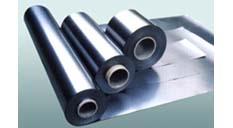
Flexible Graphite Packing
Kaxite Sealing's Flexible Graphite Packing is a high-performance sealing solution designed for industrial applications. Its flexible graphite material offers superior thermal conductivity, durability, and resistance to extreme temperatures, making it ideal for valves, pumps, and reactors. With its unique self-lubricating properties, it ensures long-lasting, leak-free performance, saving time and costs. This product is perfect for engineers and maintenance professionals seeking reliable sealing in harsh environments. Experience peace of mind and enhanced efficiency—choose Kaxite Sealing for unmatched quality and innovation.

Aramid Fiber Packing
Discover Kaxite Sealing's Aramid Fiber Packing, engineered for extreme environments like pumps and valves. Its superior durability, heat resistance, and chemical stability outperform competitors. Perfect for industrial professionals, it ensures reliable sealing and peace of mind. Elevate your operations with our trusted solution today!

CGFO Packing
Discover Kaxite Sealing's CGFO Packing, the ultimate sealing solution for industrial and home use. Expertly crafted for durability and leak-proof performance, it's perfect for professionals and DIY enthusiasts in plumbing, automotive, and maintenance. Enjoy peace of mind with superior materials and innovative design that outlasts competitors. Experience reliable sealing that solves common issues effortlessly, available now for your projects.

Carbonized Fiber Packing
Discover Kaxite Sealing's Carbonized Fiber Packing, a premium solution for sealing applications. This product excels in durability, high-temperature resistance, and chemical stability, making it ideal for industrial engineers and maintenance professionals. It ensures reliable performance in harsh conditions, offering peace of mind and enhanced safety. Unique carbonized fibers provide superior sealing compared to standard alternatives. Explore the difference with Kaxite Sealing today for secure and efficient operations.

Injectable Sealant
Discover Kaxite Sealing's Injectable Sealant, a premium solution designed for effortless repairs in home and automotive settings. Its unique formula bonds quickly and permanently, offering superior durability and ease of use. Ideal for DIY enthusiasts and professionals tackling leaks or cracks, this sealant transforms tedious fixes into quick, reliable solutions. Experience the confidence of a long-lasting finish that outshines ordinary products, backed by a trusted brand. Get yours today and elevate your repair projects with unmatched performance!

PTFE Filament Packing
Kaxite Sealing's PTFE Filament Packing offers superior sealing performance with high chemical resistance and durability for industrial applications. Its unique filament design ensures tight, leak-proof seals, enhancing efficiency in demanding environments. Ideal for engineers and maintenance professionals, it provides reliable, long-lasting solutions, making operations smoother and more cost-effective. Experience the Kaxite Sealing difference today.


