- Home
- About Us
- Products
- Gaskets
- Braided Packing
- Graphite Packing
- Aramid Packing
- PTFE Packing
- Graphite PTFE Packing
- Carbon Fiber Packing
- Asbsetos Packing
- Ceramic Packing
- Fiberglass Packing
- Acrylic Packing
- Cotton Packing
- Injectable Sealant
- Synthetic Fiber Packing
- Vegetable Fiber Packing
- Mineral Fiber Packing
- Molded Packing Ring
- Die-formed Graphite Ring
- Compression Sheets
- Sealing Materials
- Sealing Machines
- Sealing Tools
- Insulation Products
- PTFE
- Metallic Gaskets
- Fep
- PFA
- News
- Download
- Send Inquiry
- Contact Us

Premium Graphite Packing for Industrial Sealing Solutions Customized to Your Specifications
Graphite Packing: The Definitive Guide for Superior Sealing Performance
In the demanding world of industrial sealing, finding a material that offers a perfect balance of reliability, durability, and performance under extreme conditions is paramount. Graphite Packing stands out as a premier solution, engineered to meet the rigorous demands of modern applications. Known for its exceptional thermal stability, chemical inertness, and self-lubricating properties, graphite packing is the go-to choice for sealing pumps, valves, agitators, and other rotary or reciprocating equipment handling aggressive media and high temperatures. This comprehensive guide delves into the technical specifications, advantages, and common queries surrounding this advanced sealing material.
Core Advantages of Graphite Packing
Graphite packing offers a suite of benefits that make it superior to many traditional packing materials like asbestos or aramid fibers.
- Exceptional Thermal Conductivity: Rapidly dissipates heat from the shaft, reducing the risk of heat build-up and potential damage to equipment components.
- Superior Chemical Resistance: Inert to a wide range of chemicals, acids, alkalis, and solvents, ensuring long-term integrity in corrosive environments.
- Excellent Self-Lubrication: The layered structure of graphite provides inherent lubricity, minimizing friction and wear on the shaft or stem, which extends both packing and equipment life.
- High-Temperature Stability: Can operate continuously in temperatures ranging from cryogenic levels up to 3000°F (1650°C) in inert atmospheres, and up to 850°F (450°C) in oxidizing environments.
- Low Permeability & Creep Relaxation: Maintains a consistent seal with minimal leakage, as it conforms well to sealing surfaces and resists deformation under load over time.
- Flexibility and Conformability: Easily adjusts to irregularities in the stuffing box or on the shaft, creating an effective seal even on slightly worn equipment.
Detailed Product Specifications & Parameters
Our high-performance graphite packing is manufactured to exacting standards. Below are the key specifications presented in a detailed table for clarity and ease of reference.
| Parameter / Property | Specification / Value | Test Standard / Notes |
|---|---|---|
| Material Composition | Reinforced Flexible Graphite (≥98% Carbon), sometimes with Inconel or other alloy foil inserts. | Pure, exfoliated graphite ribbon, anti-oxidant impregnated. |
| Temperature Range (Continuous) | -450°F to 850°F (-268°C to 454°C) in air; Up to 3000°F (1650°C) in inert/reducing atmospheres. | ASTM D-570 |
| pH Range | 0 - 14 (Excellent resistance to most acids, alkalis, and organics). | Excluding strongly oxidizing acids at high temperatures. |
| Density (Typical) | 65 - 110 lbs/ft³ (1.04 - 1.76 g/cm³) | Variable based on compression and ribbon density. |
| Tensile Strength | ≥ 1500 psi (10.3 MPa) - Machine Direction | ASTM D-828 |
| Compressibility | 40 - 60% | ASTM F36 |
| Recovery | ≥ 35% | ASTM F36 |
| Thermal Conductivity | 50 - 150 W/m·K (in-plane) | ASTM E-1461 |
| Coefficient of Friction | 0.05 - 0.15 (Dynamic, against steel) | Low, self-lubricating property. |
| Leakage Rate | API 602 / 622 compliant; Typically < 100 ppm. | Depends on proper installation and number of rings. |
| Standard Sizes (Square Cross-Section) | 1/8", 3/16", 1/4", 5/16", 3/8", 1/2", 5/8", 3/4", 1" | Also available in rectangular and custom die-formed rings. |
Available Forms & Styles:
- Spool Packing: Continuous length on spools for custom cutting and ring formation on-site.
- Die-Formed Rings: Pre-cut, pre-formed rings for specific shaft/stem and stuffing box dimensions, ensuring perfect fit and faster installation.
- Braided Graphite Packing: Graphite yarns braided with corrosion-resistant wire (e.g., Inconel) for enhanced strength in high-pressure, abrasive applications.
- Laminated Styles: Graphite foil laminated with metal foils (e.g., 304SS, Inconel) for added structural integrity in severe service.
Frequently Asked Questions (FAQ) About Graphite Packing
Q: What are the primary applications for graphite packing?
A: Graphite packing is ideal for sealing rotating and reciprocating shafts in pumps, valves, mixers, and agitators. It is extensively used in industries such as chemical processing, petrochemical, power generation (including nuclear), pharmaceuticals, pulp and paper, and food processing. It excels in services involving hot water, steam, heat transfer fluids, acids, caustics, hydrocarbons, and other aggressive media.
Q: How does graphite packing compare to PTFE (Teflon) based packing?
A: While PTFE packing offers good chemical resistance, graphite packing significantly outperforms it in high-temperature applications. PTFE begins to degrade around 500°F (260°C), whereas graphite remains stable well beyond that. Graphite also has superior thermal conductivity, which helps manage heat at the seal interface. PTFE may be preferable for very low-temperature or specific chemical applications where graphite is not recommended.
Q: Can graphite packing be used on potable water or food-grade applications?
A: Yes, but it is crucial to select a grade specifically certified for such use. High-purity, reinforced flexible graphite packing without toxic anti-oxidant treatments is available. It must comply with relevant standards like FDA CFR 21 or NSF/ANSI 61. Always verify the manufacturer's certifications for food, water, or pharmaceutical contact.
Q: Is graphite packing difficult to install?
A: Not at all. It is relatively easy to install due to its flexibility. For spool packing, rings are typically cut using the "wrap-and-cut" method on the shaft. Die-formed rings eliminate this step. The key is to stagger the ring joints by 90 degrees, tighten the gland follower evenly and gradually (never overtighten initially), and allow a proper run-in period with subsequent adjustments after heat cycles.
Q: How many rings of graphite packing should be installed in a stuffing box?
A: The number depends on the packing cross-section and stuffing box depth. A general rule is to install a number of rings equal to the shaft diameter divided by the packing width. For example, for a 2-inch shaft with 1/4" packing, install approximately 8 rings. It's essential to leave enough space for the gland follower. Refer to the equipment manual or packing manufacturer's guidelines for precise recommendations.
Q: Does graphite packing require lubrication or cooling?
A: Graphite is self-lubricating, so external lubricants are generally not required and can sometimes be detrimental. However, in very high-speed or high-pressure applications, a minimal external flush with a compatible clean fluid (like water) may be used for cooling purposes, not lubrication. The packing's own graphite layers provide the necessary lubricity.
Q: What are the limitations of graphite packing? When should it NOT be used?
A: Graphite packing should be avoided in strongly oxidizing environments at high temperatures (e.g., concentrated nitric acid, hot hydrogen peroxide) as oxidation can accelerate. It is also not recommended for applications with molten or highly reactive metals (e.g., molten aluminum) or in situations where graphite's electrical conductivity could promote galvanic corrosion. Always consult chemical compatibility charts for your specific service.
Q: How do I know if my graphite packing is failing?
A: Signs of failure include a persistent increase in leakage that cannot be corrected by gentle gland adjustment, excessive black graphite dust around the equipment (indicating rapid wear), visible degradation or hardening of the packing rings, or scoring on the shaft. Regular maintenance checks and monitoring leakage rates are the best practices for early detection.
Q: Can graphite packing be used to repair a scored or slightly damaged shaft?
A: Graphite packing's conformability allows it to seal effectively on shafts with minor imperfections, light scoring, or out-of-round conditions better than many harder packing materials. It can fill small grooves and irregularities. However, for severely damaged shafts, proper repair (e.g., machining, sleeving) is always recommended for optimal seal life and performance.
Q: What is the expected service life of graphite packing?
A> Service life varies dramatically based on operating conditions: media, temperature, pressure, shaft speed, surface finish, and installation quality. Under normal conditions with proper installation and maintenance, graphite packing can last from several months to multiple years. In severe service, it still typically outperforms organic or PTFE-based packings by a significant margin.
Selection Guidelines and Best Practices
Choosing the right graphite packing involves considering several application-specific factors. Use the following checklist:
- Service Media: Confirm chemical compatibility with the fluid or gas being sealed.
- Temperature & Pressure: Ensure the packing's rated range exceeds the maximum operating conditions.
- Shaft Speed (RPM) & Surface Finish: Higher speeds may require a reinforced style. A smooth shaft finish (16-32 µin Ra) is ideal.
- Equipment Type & Condition: Consider the motion (rotary, reciprocating), stuffing box dimensions, and shaft condition.
- Regulatory Requirements: Check for necessary certifications (FDA, NSF, API, TA-Luft).
For installation, always clean the stuffing box thoroughly, use sharp tools to cut rings, stagger joints, and follow the manufacturer's recommended tightening procedure—typically "snug" on initial assembly, followed by incremental tightening during the heat-up and run-in period until leakage is controlled to a slight drip for cooling.

- View as

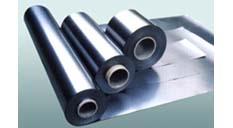
Flexible Graphite Packing
Kaxite Sealing's Flexible Graphite Packing is a high-performance sealing solution designed for industrial applications. Its flexible graphite material offers superior thermal conductivity, durability, and resistance to extreme temperatures, making it ideal for valves, pumps, and reactors. With its unique self-lubricating properties, it ensures long-lasting, leak-free performance, saving time and costs. This product is perfect for engineers and maintenance professionals seeking reliable sealing in harsh environments. Experience peace of mind and enhanced efficiency—choose Kaxite Sealing for unmatched quality and innovation.

Graphite Packing Reinforced With Metal Wire
Discover the reliability of Kaxite Sealing's Graphite Packing Reinforced With Metal Wire, a premium sealing solution designed for demanding industrial applications. This product combines flexible graphite with metal wire reinforcement to withstand extreme temperatures and pressures, ensuring a durable, leak-free seal. Ideal for engineers and maintenance professionals in sectors like manufacturing and energy, it reduces downtime and enhances safety. Experience unmatched performance and peace of mind with this innovative, cost-effective upgrade over traditional packings. Trust Kaxite Sealing for superior sealing that boosts operational efficiency.

Graphite Packing With Carbon Fiber Corners
Discover Kaxite Sealing's Graphite Packing with Carbon Fiber Corners, a premium sealing solution designed for industrial applications. This product excels in durability and heat resistance, thanks to its advanced graphite and carbon fiber materials, ensuring reliable performance in demanding environments like engines, pumps, and valves. Tailored for engineers, maintenance teams, and manufacturing professionals, it prevents leaks and enhances efficiency, offering peace of mind with reduced downtime. Its unique carbon fiber corners provide superior strength and longevity compared to standard graphite packings. Experience unmatched sealing precision and elevate your operations with this innovative solution from Kaxite Sealing—trust in quality and performance.

Graphite Packing With PTFE Impregnated
Discover Kaxite Sealing's Graphite Packing With PTFE Impregnated, the ultimate sealing solution for demanding industrial applications. Combining flexible graphite with PTFE impregnation, it offers superior leak prevention, high-temperature resistance, and reduced maintenance in pumps and valves. Ideal for engineers and plant operators, this durable packing enhances safety and efficiency, solving costly downtime issues. Its unique blend outperforms traditional materials, ensuring long-lasting performance under extreme conditions. Choose reliability—upgrade your systems today for seamless operations.

Jacketed Graphite Packing
Kaxite Sealing's Jacketed Graphite Packing offers superior sealing for high-temperature industrial applications, with a durable graphite core and flexible jacket enhancing efficiency and safety. Its unique design ensures reliable performance in demanding conditions like chemical plants, solving leakage issues and boosting confidence. Experience unmatched durability and innovative technology for professionals seeking top-tier sealing solutions.

Super Graphite Valve Packing
Kaxite Sealing's Super Graphite Valve Packing revolutionizes sealing solutions with advanced graphite technology, ensuring superior durability and leak resistance for industrial valves. Ideal for engineers and maintenance teams in high-pressure environments, it solves costly downtime and safety issues. Unlike competitors, its unique flexible design adapts to extreme conditions, delivering long-lasting performance and peace of mind. Experience reliable, efficient operations today.


