- Home
- About Us
- Products
- Gaskets
- Braided Packing
- Graphite Packing
- Aramid Packing
- PTFE Packing
- Graphite PTFE Packing
- Carbon Fiber Packing
- Asbsetos Packing
- Ceramic Packing
- Fiberglass Packing
- Acrylic Packing
- Cotton Packing
- Injectable Sealant
- Synthetic Fiber Packing
- Vegetable Fiber Packing
- Mineral Fiber Packing
- Molded Packing Ring
- Die-formed Graphite Ring
- Compression Sheets
- Sealing Materials
- Sealing Machines
- Sealing Tools
- Insulation Products
- PTFE
- Metallic Gaskets
- Fep
- PFA
- News
- Download
- Send Inquiry
- Contact Us

Custom OEM Graphite Sheet Machines for Wholesale Manufacturing Solutions
Professional Guide to Graphite Sheet Machines
In the high-precision world of material processing, graphite sheet machines represent a cornerstone technology for industries ranging from electronics and aerospace to energy storage and semiconductors. These specialized machines are engineered to transform raw graphite materials—notably flexible graphite sheets or expanded graphite—into precise, high-performance components. Unlike conventional machining centers, graphite sheet equipment is designed to handle the unique challenges posed by graphite, such as its brittleness, abrasiveness, and the need for ultra-fine dust extraction. Investing in the right graphite processing machinery is not merely a purchase; it's a strategic decision that directly impacts product quality, production efficiency, and operational safety. This comprehensive guide delves into the core functionalities, critical technical specifications, and operational considerations of modern graphite sheet machines, providing the insights necessary for making an informed capital investment.
Core Functionalities and Operational Principles
A graphite sheet machine is an integrated system, not just a single tool. Its primary function is to cut, shape, mill, and sometimes laminate flexible graphite sheets into specific forms with exceptional accuracy. The process typically involves several synchronized stages:
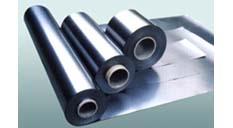
- Material Feeding & Unwinding: Rolls of flexible graphite sheet are loaded onto an automatic unwinder, ensuring consistent material tension and feed into the processing zone.
- Precision Cutting/Shaping: This is the core stage, utilizing advanced CNC (Computer Numerical Control) systems. Cutting can be performed via:
- Ultrasonic Cutting: Uses high-frequency vibration for clean, dust-minimized edges, ideal for sealing gaskets.
- Laser Cutting: Offers non-contact, highly intricate cutting for complex profiles with excellent precision.
- Die Cutting/Punching: Efficient for high-volume production of standardized shapes using custom-designed dies.
- CNC Milling/Routing: For 3D contours, pockets, and complex geometric features directly from graphite blocks or laminated sheets.
- Integrated Dust Management: A fully enclosed vacuum system immediately captures graphite particles at the source. This is critical for maintaining a clean workshop, protecting machine components from abrasive dust, and ensuring operator safety.
- Stacking & Collection: Finished parts are automatically stacked, counted, and collected, ready for packaging or the next assembly stage.
Critical Technical Specifications and Parameters
Evaluating a graphite sheet machine requires a detailed analysis of its technical parameters. The following tables outline the key specifications across different machine types.
Table 1: General Machine Specifications
| Parameter | Typical Range / Description | Importance for Selection |
|---|---|---|
| Max. Processing Width | 600mm - 2000mm | Determines the maximum sheet/roll width the machine can handle. |
| Material Thickness Range | 0.1mm - 6.0mm | Defines the versatility for different product requirements (e.g., thin foils for EMI shielding vs. thick sheets for gaskets). |
| Positioning Accuracy | ±0.05mm - ±0.01mm | Critical for high-tolerance parts, especially in electronics and semiconductor tooling. |
| Cutting Speed | 5 - 100 m/min (varies by method) | Directly impacts production throughput and cycle times. |
| Spindle Power (for CNC Mills) | 3 kW - 15 kW | Affects material removal rates and ability to machine denser graphite materials. |
| Dust Extraction Airflow | 1000 - 5000 m³/h | Ensures effective containment of fine graphite particles, protecting the machine and environment. |
| Control System | Industrial PC with CNC software (e.g., Siemens, Fanuc, proprietary) | Defines user interface, programming flexibility, and compatibility with CAD/CAM software. |
| Power Requirements | 3-Phase, 380V - 480V, 15-60 kVA | Essential for facility planning and electrical infrastructure. |
Table 2: Comparison of Cutting Technologies
| Technology | Best For | Edge Quality | Dust Generation | Tooling/Laser Cost |
|---|---|---|---|---|
| Ultrasonic Cutting | Sealing gaskets, simple shapes, high-speed production. | Very clean, slightly compressed edge. | Very Low | Moderate (consumable blades/horns) |
| Laser Cutting | Complex, intricate designs, prototyping, no-tool-contact needed. | Precise, may have slight carbonization (heat-affected zone). | Low (extracted as fume) | High (laser source maintenance) |
| CNC Milling | 3D shapes, cavities, molds, and complex 3D geometries from blocks. | Machined surface, depends on tool path and bit. | Very High (requires robust extraction) | Low-Moderate (end mills are consumable) |
| Die Cutting/Punching | Mass production of identical, simple to moderately complex shapes. | Clean, defined by die sharpness. | Moderate | High initial die cost, low per-part cost. |
Key Components and Subsystems
- CNC Motion System: High-precision linear guides and ball screws driven by servo motors form the backbone of accuracy.
- Cutting Head/Tool Changer: May include an automatic tool changer (ATC) for CNC mills or interchangeable ultrasonic/laser heads.
- Dust Extraction & Filtration Unit:
Often a multi-stage system with cyclone separators and HEPA filters to capture fine particles (often below 1 micron). - Material Handling System: Includes unwind/rewind stations, tension controllers, and conveyor belts for automated workflow.
- Machine Frame & Enclosure: Robust construction (often polymer concrete or welded steel) for vibration damping, and full enclosure for safety and dust containment.
Graphite Sheet Machines: Frequently Asked Questions (FAQ)
Q: What are the primary applications for parts produced by graphite sheet machines?
A: Components manufactured by these machines are vital across advanced industries. Key applications include: High-temperature gaskets and seals for automotive and industrial engines; Thermal interface materials (TIMs) and heat spreaders for cooling electronics in laptops, LEDs, and 5G equipment; Flexible graphite foil used as a sealing element in fuel cells; EMI/RFI shielding gaskets for telecommunications and aerospace; Anode and cathode components for lithium-ion and other battery technologies; and Crucibles, molds, and fixtures for semiconductor crystal growth and metal processing.
Q: Why is specialized dust extraction non-negotiable for graphite machining?
A: Graphite dust is highly abrasive, conductive, and can be a respiratory hazard. Without a high-performance, fully integrated extraction system, the fine particles will rapidly wear down machine guideways, bearings, and electronic components, leading to frequent breakdowns and high maintenance costs. Furthermore, airborne graphite dust poses an explosion risk in certain concentrations and a significant health risk to operators. A proper system captures dust at the very point of generation.
Q: How does a CNC graphite milling machine differ from a standard CNC metal mill?
A: While they share similar CNC principles, graphite machines are specifically optimized for graphite's properties. The most critical difference is the completely sealed machining area with powerful vacuum ports around the spindle and table. They use specialized tool paths and often higher spindle speeds to achieve a good surface finish on brittle graphite. The control software may have specific routines for graphite. Using a standard metal mill for graphite will result in catastrophic contamination of the machine and workshop.
Q: What factors most significantly influence the production speed of a graphite sheet cutting line?
A: Speed is determined by an interplay of factors: The cutting technology (e.g., ultrasonic is typically faster for simple shapes than laser); The complexity and size of the part profile – intricate shapes with many direction changes take longer; The material thickness and density – thicker, denser material requires slower processing; The acceleration and rapid traverse rates of the CNC axes; and The efficiency of the material handling system (automatic loading/unloading minimizes downtime).
Q: What are the main considerations for maintenance of a graphite sheet machine?
A: A proactive maintenance schedule is essential. Key tasks include: Daily inspection and emptying of the dust collection system's primary hopper; Regular cleaning or replacement of HEPA filters as indicated by pressure gauges; Lubrication of linear guides and ball screws as per the manufacturer's schedule (using recommended lubricants); Checking and calibrating the tension control on the unwinding system; Inspecting cutting tools (ultrasonic blades, laser lenses, milling bits) for wear and replacing them promptly to maintain edge quality; and Verifying the accuracy of the CNC system through periodic calibration tests.
Q: Can one machine handle both flexible graphite sheets and rigid graphite blocks or electrodes?
A: This depends entirely on the machine's design. Some high-end CNC milling centers are versatile and, with appropriate fixturing and programming, can machine both rigid graphite blocks (for EDM electrodes or molds) and laminated sheets. However, dedicated sheet processing lines (for ultrasonic, laser, or die cutting) are designed specifically for rolled goods and cannot machine solid blocks. It is crucial to discuss your specific material range with the equipment manufacturer.
Q: What software is typically used to operate these machines?
A: Operation involves two main software types. First, CAD/CAM Software (like AutoCAD, SolidWorks, Mastercam, or specialized tools) is used offline to design the part and generate the machine-specific toolpath code (G-code). Second, the Machine's CNC Control Software (embedded in the industrial PC) interprets this G-code, controls the machine's movements, spindle, and peripherals, and provides the user interface for setup, monitoring, and manual operation.