- Home
- About Us
- Products
- Gaskets
- Braided Packing
- Graphite Packing
- Aramid Packing
- PTFE Packing
- Graphite PTFE Packing
- Carbon Fiber Packing
- Asbsetos Packing
- Ceramic Packing
- Fiberglass Packing
- Acrylic Packing
- Cotton Packing
- Injectable Sealant
- Synthetic Fiber Packing
- Vegetable Fiber Packing
- Mineral Fiber Packing
- Molded Packing Ring
- Die-formed Graphite Ring
- Compression Sheets
- Sealing Materials
- Sealing Machines
- Sealing Tools
- Insulation Products
- PTFE
- Metallic Gaskets
- Fep
- PFA
- News
- Download
- Send Inquiry
- Contact Us

High-quality Expanded PTFE Sheets Manufacturer with Custom Solutions
Expanded PTFE Sheets: The Ultimate Guide to a Versatile High-Performance Material
As a cornerstone of modern industrial design and engineering, high-performance polymer materials solve complex challenges across countless sectors. Among these, Expanded PTFE Sheets stand out for their unique combination of properties derived from an innovative manufacturing process. Unlike standard PTFE (Polytetrafluoroethylene), which is sintered from a fine powder, ePTFE is created by rapidly expanding PTFE in a controlled process. This expansion creates a microporous structure of nodes interconnected by fine fibrils, fundamentally transforming the material's characteristics while retaining PTFE's legendary chemical inertness and temperature resistance. This guide delves into the specifications, applications, and critical considerations for utilizing this exceptional material.
Unmatched Material Properties and Advantages
The expansion process bestows ePTFE sheets with a set of advantages that make them irreplaceable in demanding environments. Their primary benefits include:
- Exceptional Sealing Capability: The soft, compressible, and fibrous structure allows it to conform to uneven flange surfaces, creating a superior seal at low bolt loads, even on damaged or warped surfaces.
- Outstanding Chemical Resistance: Inherited from virgin PTFE, ePTFE is virtually inert, resisting attack from almost all industrial chemicals, solvents, and aggressive media, making it suitable for the most corrosive applications.
- Wide Temperature Range: It performs consistently from cryogenic temperatures as low as -268°C (-450°F) up to +315°C (+600°F) continuously, with higher short-term peaks possible.
- Excellent Stress Relaxation & Creep Resistance: Specially engineered ePTFE sheets exhibit minimal cold flow or creep under load, maintaining seal integrity over long periods without needing re-torquing.
- No Contamination: The material is pure, non-toxic, FDA-compliant grades available, and does not leach additives, making it ideal for food, beverage, pharmaceutical, and semiconductor processes.
- Dielectric Strength & UV Stability: It is an excellent electrical insulator and is highly resistant to weathering and UV degradation, suitable for outdoor and electrical applications.
Detailed Product Specifications and Data
Selecting the correct ePTFE sheet requires understanding its key physical and mechanical parameters. The following tables outline standard specifications. Note: Properties can vary based on manufacturer, density, and specific grade.
Standard Physical & Mechanical Properties
| Property | Test Method | Typical Value / Range |
|---|---|---|
| Density | ASTM D792 | 0.4 - 1.2 g/cm³ (adjustable) |
| Tensile Strength (MD) | ASTM D638 | 15 - 40 MPa |
| Tensile Strength (CD) | ASTM D638 | 10 - 30 MPa |
| Elongation at Break (MD) | ASTM D638 | 50 - 250% |
| Compression Set (22 hrs @ 25°C) | ASTM D395 | 15 - 40% |
| Maximum Operating Temperature | - | +260°C to +315°C (+500°F to +600°F) |
| Minimum Operating Temperature | - | -268°C (-450°F) |
| Thermal Conductivity | ASTM C177 | 0.05 - 0.08 W/m·K |
| Dielectric Strength | ASTM D149 | > 20 kV/mm |
Standard Available Sizes and Forms
| Parameter | Standard Options | Notes |
|---|---|---|
| Sheet Thickness | 0.5mm, 0.8mm, 1.0mm, 1.5mm, 2.0mm, 3.0mm | Custom thicknesses available upon request. |
| Sheet Width | Up to 1500mm (59 inches) | Roll or sheet format. |
| Sheet Length (Rolls) | Up to 50 meters continuous | Standard or custom cut lengths. |
| Standard Colors | White (natural), Black (carbon-filled) | Other colors possible for specialized grades. |
| Common Grades | Standard Sealing, High-Purity, Conductive (carbon-filled), Glass-Microsphere Filled | Grade selection depends on application needs. |
Primary Industrial Applications
- Gasketing & Sealing: The predominant use. Ideal for chemical processing, oil & gas, pharmaceutical, and food industry flanges, manways, and reactors. Replaces compressed asbestos fiber (CAF) and other inferior gaskets.
- Electrochemical & Fuel Cells: Used as a critical component in membranes and gas diffusion layers due to its controlled porosity and chemical stability.
- Filtration & Membranes: The microporous structure allows precise control over pore size, used in air, liquid, and sterile filtration for aggressive chemicals.
- Electrical Insulation: Provides excellent dielectric protection for wires, cables, and components in harsh environments.
- Medical & Pharmaceutical: High-purity grades are used in implantable devices, sterilization wraps, and as a barrier material in drug delivery systems.
- Expansion Joints & Bellows: Its flexibility and durability make it suitable for compensating for movement in ducting and piping systems handling corrosive fumes.
Frequently Asked Questions (FAQ) About Expanded PTFE Sheets
Q: What is the main difference between standard PTFE and Expanded PTFE (ePTFE) sheets?
A: The core difference lies in the microstructure. Standard PTFE is a solid, sintered material. ePTFE is created by expanding PTFE, forming a microporous matrix of nodes and fibrils. This gives ePTFE much greater compressibility, conformability, and softness, making it a vastly superior sealing material, while standard PTFE is better for machined parts, bearings, and linings where rigidity is needed.
Q: Can ePTFE sheets be used on any type of flange face finish?
A: Yes, one of the key advantages of ePTFE gaskets is their ability to seal effectively on a wide range of surface finishes, including smooth (RF), serrated (Spiral-Wound Groove), and even damaged or lightly pitted surfaces. They achieve this by flowing into the imperfections, creating a tight, leak-free seal at relatively low bolt loads.
Q: How do I select the appropriate thickness and density for my gasket application?
A: Thickness selection depends on flange conditions and gap filling needs. For standard flanges in good condition, 1.5mm is common. For uneven or warped flanges, 3.0mm may be required. Density affects compressibility and recovery: lower density (~0.6 g/cm³) offers higher compressibility for easy sealing; higher density (~1.0 g/cm³) provides better mechanical strength and creep resistance for higher pressure/temperature services.
Q: What are the temperature and pressure limits for ePTFE gaskets?
A: Temperature limits are exceptionally broad, from cryogenic (-268°C) up to +260°C continuous, with short-term peaks to +315°C possible. Pressure ratings are system-dependent. For static seals, ePTFE can handle full vacuum and pressures exceeding 200 bar (2900 psi) in standard applications when installed correctly on suitable flanges. Always consult pressure/temperature charts from the manufacturer for specific grades.
Q: Does ePTFE contain any additives like binders or fillers?
A: Pure, high-quality ePTFE sheets are made from 100% virgin PTFE polymer without binders, plasticizers, or coloring agents. This ensures full chemical resistance and no leaching. However, special grades exist that incorporate fillers like carbon (for conductivity or color) or glass microspheres (for improved creep resistance). These are explicitly labeled as filled grades.
Q: How should I store and handle ePTFE sheet material?
A: Store sheets in a cool, dry place away from direct sunlight and heat sources. Keep them in their original packaging until use to prevent contamination from dust or oils. Handle with clean gloves to prevent skin oils from affecting the surface, especially for high-purity applications. The material is soft and can be easily cut with sharp knives, scissors, or die-cut.
Q: Are there any chemicals that attack or degrade ePTFE?
A: Expanded PTFE sheets are resistant to virtually all industrial chemicals, including strong acids, bases, halogens, and solvents. The only known exceptions are extreme conditions involving certain reactive metals (like molten alkali metals) and very high-temperature fluorine gas. It is always prudent to check chemical compatibility charts for specific, highly exotic media.
Q: Can ePTFE sheets be laminated or combined with other materials?
A: Absolutely. A common and highly effective configuration is a composite gasket, where an ePTFE sheet is laminated with a sturdy carrier material like stainless steel, PTFE, or elastomers. This creates a gasket with the sealing power of ePTFE and the structural stability, handling ease, and anti-blowout protection of the carrier. These are often called "PTFE Envelope Gaskets" or "Filled Gaskets."

- View as

Expanded PTFE Sheet
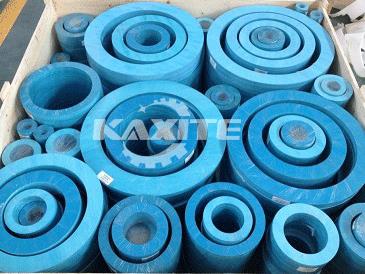
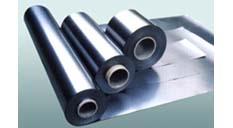
Discover Kaxite Sealing's Expanded PTFE Sheet: a high-performance material engineered for exceptional sealing, insulation, and chemical resistance. Made from expanded PTFE, it offers superior durability and flexibility, ideal for industrial, automotive, and aerospace applications. This sheet solves leak and contamination issues, ensuring reliability and peace of mind. Its unique porous structure provides unmatched breathability and resistance, outperforming standard PTFE options. Experience enhanced efficiency and safety—trust Kaxite Sealing for premium solutions that deliver lasting performance and confidence in demanding environments.

Expanded PTFE Round Cord
Discover Kaxite Sealing's Expanded PTFE Round Cord, a versatile sealing solution crafted from premium expanded PTFE. It excels in reliability, chemical resistance, and durability, making it ideal for industrial and automotive applications. Users experience enhanced performance and peace of mind, knowing it outperforms competitors with superior sealing and longevity. Elevate your projects with this trusted choice.

Expanded PTFE Gasket
Kaxite Sealing's Expanded PTFE Gasket delivers unparalleled sealing performance in harsh industrial environments. Crafted from high-quality expanded PTFE, it ensures leak-proof durability, temperature resistance, and chemical compatibility, ideal for engineers and maintenance professionals. Experience reliable, long-lasting protection that solves leakage issues efficiently. Its unique flexible design outshines standard gaskets, offering easy installation and peace of mind. Trust Kaxite Sealing for superior sealing solutions that enhance safety and efficiency.

Virgin Expanded PTFE Teflon Ptfe Sheet Increases Compressive Strength
Discover Kaxite Sealing's Virgin Expanded PTFE Teflon PTFE Sheet, engineered to significantly increase compressive strength for superior durability in demanding industrial applications. Made from high-quality virgin materials, it offers excellent chemical resistance and long-lasting performance, ideal for engineers and professionals in sealing, gasketing, and insulation. Experience enhanced reliability and reduced downtime with this standout solution, backed by Kaxite Sealing's commitment to quality and innovation.

White Slippery Teflon Ptfe Sheet Virgin Ptfe Moulded Sheet
Kaxite Sealing presents the White Slippery Teflon Ptfe Sheet, a virgin Ptfe moulded sheet engineered for unmatched durability and low friction in demanding industrial applications. Its pure PTFE material ensures chemical resistance and high-temperature stability, ideal for sealing, gasket, and insulation uses. Perfect for engineers and manufacturers, this sheet delivers reliable performance in harsh environments, solving leaks and wear issues while enhancing operational efficiency. Elevate your projects with Kaxite Sealing's premium quality—experience the difference today!

Moulded Die-Pressed Teflon PTFE Sheet For Seals Linings Diaphragm
Discover Kaxite Sealing's Moulded Die-Pressed Teflon PTFE Sheet, engineered for reliable seals, linings, and diaphragms in demanding industrial applications. Our high-quality, durable product excels in harsh environments, saving costs and preventing leaks, making it ideal for manufacturers and engineers seeking superior performance.