- Home
- About Us
- Products
- Gaskets
- Braided Packing
- Graphite Packing
- Aramid Packing
- PTFE Packing
- Graphite PTFE Packing
- Carbon Fiber Packing
- Asbsetos Packing
- Ceramic Packing
- Fiberglass Packing
- Acrylic Packing
- Cotton Packing
- Injectable Sealant
- Synthetic Fiber Packing
- Vegetable Fiber Packing
- Mineral Fiber Packing
- Molded Packing Ring
- Die-formed Graphite Ring
- Compression Sheets
- Sealing Materials
- Sealing Machines
- Sealing Tools
- Insulation Products
- PTFE
- Metallic Gaskets
- Fep
- PFA
- News
- Download
- Send Inquiry
- Contact Us

Leading Graphite Sheets Manufacturer in China for Custom OEM and ODM Solutions
Understanding Graphite Sheets: A Comprehensive Guide
In the world of advanced materials, graphite sheets stand out as a cornerstone technology for thermal management and electrical applications. These highly engineered materials, derived from natural or synthetic graphite, are processed into thin, flexible sheets that exhibit exceptional properties. Their unique combination of high thermal conductivity, electrical conductivity, and natural lubricity makes them indispensable in industries ranging from consumer electronics to aerospace and automotive engineering. This guide delves deep into the specifications, benefits, and applications of graphite sheets, providing a professional resource for engineers, procurement specialists, and product designers.
Core Material Properties and Advantages
The performance of graphite sheets is rooted in their layered, hexagonal crystal lattice structure. This structure allows for efficient in-plane conduction of heat and electricity while remaining flexible and compressible. Unlike traditional metal heat sinks, graphite sheets are remarkably lightweight and can be easily cut and formed to fit complex geometries. Their primary advantages include:
- Exceptional Thermal Conductivity: Graphite sheets can achieve in-plane thermal conductivity ranging from 300 to over 1,800 W/mK, far surpassing copper and aluminum. This allows for rapid lateral spreading of heat from concentrated hot spots.
- High Electrical Conductivity: They provide excellent electrical conductivity, making them suitable for EMI shielding, grounding, and electrode applications.
- Ultra-Thin and Lightweight: Available in thicknesses from as low as 0.01mm, they add minimal weight and volume to assemblies.
- Flexibility and Conformability: They can be bent, folded, and shaped to fit tight spaces and irregular surfaces, ensuring optimal contact for heat transfer.
- Chemical Inertness and Stability: Resistant to most solvents and stable across a wide temperature range, ensuring long-term reliability.
Detailed Product Parameters and Specifications
Selecting the correct graphite sheet requires a careful analysis of its technical parameters. Below is a detailed breakdown of key specifications to guide your selection process.
Standard Physical & Thermal Properties
| Parameter | Typical Value Range | Test Standard / Notes |
|---|---|---|
| Thickness | 0.01 mm - 3.0 mm | Custom thicknesses available |
| In-Plane Thermal Conductivity | 300 - 1,800 W/m·K | ASTM E1461 (Laser Flash Method) |
| Through-Plane Thermal Conductivity | 5 - 20 W/m·K | ASTM E1461 |
| Density | 1.0 - 2.2 g/cm³ | Varies with compression and grade |
| Temperature Range (Continuous Use) | -40°C to +400°C (In Air) | Up to 3000°C in inert atmospheres |
| Tensile Strength | 5 - 15 MPa | ASTM D882 |
| Compressibility | 10 - 40% | Under specific load conditions |
Electrical & Surface Properties
| Parameter | Typical Value Range | Description |
|---|---|---|
| In-Plane Electrical Resistivity | 2.0 x 10⁻⁵ - 1.0 x 10⁻⁴ Ω·cm | Highly conductive along the sheet plane |
| Through-Plane Electrical Resistivity | ~0.1 - 1.0 Ω·cm | Higher resistivity across the thickness |
| EMI Shielding Effectiveness | 60 - 120 dB (1-10 GHz) | Depends on thickness and layer construction |
| Surface Finish | Standard, PSA-backed, Silicone-coated | Pressure-Sensitive Adhesive (PSA) for easy mounting |
| Coefficient of Friction | 0.05 - 0.15 (Dynamic) | Provides natural lubricity |
Common Applications of Graphite Sheets
- Consumer Electronics: Heat spreading in smartphones, tablets, laptops, and LED TVs. Dissipates heat from CPUs, GPUs, and batteries.
- Telecommunications & 5G: Thermal management in base stations, power amplifiers, and RF components.
- Automotive Electronics: Cooling for LED headlights, battery management systems (BMS) in EVs, and infotainment systems.
- Power Electronics: Insulated Gate Bipolar Transistors (IGBTs), power supplies, and inverters.
- Medical Devices: Used in diagnostic imaging equipment and portable medical devices requiring lightweight cooling.
- Aerospace & Defense: Thermal management in avionics, radar systems, and satellite components.
Frequently Asked Questions (FAQ) About Graphite Sheets
General and Selection Questions
Q: What is the main difference between natural and synthetic graphite sheets?
A: Natural graphite sheets are produced from mined graphite ore, offering a cost-effective solution with good thermal performance. Synthetic graphite sheets are manufactured from polymer films (like polyimide) through a high-temperature graphitization process. Synthetic grades typically offer higher purity, more consistent properties, and superior thermal conductivity (often exceeding 1500 W/mK), but at a higher cost. The choice depends on the specific performance requirements and budget constraints of the application.
Q: How do I choose the right thickness for my application?
A: Thickness selection is a balance between thermal performance, space constraints, and mechanical needs. Thinner sheets (0.1mm or less) are ideal for ultra-compact devices like smartphones, offering excellent flexibility. Thicker sheets (0.5mm to 2.0mm) provide higher structural rigidity, greater heat spreading capacity, and can handle higher heat fluxes. For applications involving a large gap between the heat source and the heat sink, a compressible, thicker sheet may be necessary to ensure proper interfacial contact and reduce thermal resistance.
Q: Can graphite sheets be used as a replacement for thermal pads or grease?
A: Graphite sheets can often replace traditional thermal interface materials (TIMs) like silicone pads or grease, but with distinct advantages and considerations. Unlike grease, they are dry, non-pumping, and non-migrating, offering long-term reliability. Compared to silicone pads, they provide significantly higher in-plane thermal conductivity for heat spreading. However, their through-plane conductivity might be lower than some high-performance gap fillers. They are best used where the primary need is to spread heat laterally from a concentrated source across a larger surface area.
Handling, Installation, and Performance
Q: Are graphite sheets fragile? How should they be handled and cut?
A: While flexible, bare graphite sheets can be delicate and may tear if mishandled. They are often supplied with protective films or on carrier liners. For cutting, sharp scissors, precision blades, or die-cutting are recommended. Laser cutting is highly effective for complex shapes and provides a clean, sealed edge. Always handle the sheets by the edges and avoid excessive bending or creasing. PSA-backed versions are easier to handle and install.
Q: What is the significance of "in-plane" versus "through-plane" thermal conductivity?
A: This is a critical concept. In-plane conductivity refers to how well heat travels across the surface/plane of the sheet. This is the exceptionally high value (e.g., 1500 W/mK) that makes graphite sheets superb heat spreaders. Through-plane conductivity refers to heat transfer directly through the thickness of the sheet. This value is much lower (e.g., 10 W/mK). Therefore, for optimal performance, the sheet should be oriented so the primary heat flow is along its plane, spreading heat to a larger area where it can be dissipated by convection or conduction to a secondary heat sink.
Q: Do I need to apply additional adhesive when installing a graphite sheet?
A: It depends on the product variant. Standard bare graphite sheets often require a separate adhesive or mechanical clamping. Many commercial graphite sheets come with an integrated, pre-applied Pressure-Sensitive Adhesive (PSA) on one or both sides, protected by a removable liner. This PSA is typically acrylic or silicone-based and is designed for clean, reliable bonding. Always ensure the application surface is clean, dry, and free of dust before applying a PSA-backed sheet.
Q: What are the long-term reliability concerns with graphite sheets?
A: Graphite sheets are chemically stable and not prone to drying out or pumping like thermal greases. Key reliability considerations include: Oxidation: At sustained temperatures above 400-450°C in air, oxidation can occur. For high-temperature air environments, oxidized or coated versions are available. Galvanic Corrosion: When in direct contact with dissimilar metals (like aluminum) in the presence of an electrolyte, galvanic corrosion is possible. Using dielectric coatings or isolating layers can mitigate this. Mechanical Integrity: Ensure the sheet is not subjected to sharp edges or points of excessive stress that could cause tearing.
Comparative and Application-Specific Questions
Q: How do graphite sheets compare to metal shims (copper/aluminum) for heat spreading?
A: Graphite sheets offer a superior strength-to-weight ratio for thermal management. A graphite sheet can provide equivalent or better in-plane heat spreading than a copper shim while being approximately 5 times lighter and 30-40% thinner. This is crucial for weight-sensitive applications like drones or portable electronics. They are also more flexible, allowing for better conformity to uneven surfaces, which reduces interfacial thermal resistance.
Q: Can graphite sheets be used for EMI shielding?
A: Yes, due to their high electrical conductivity, graphite sheets are effective for electromagnetic interference (EMI) shielding. They can absorb and reflect electromagnetic waves, providing shielding effectiveness typically in the range of 60-120 dB across a broad frequency spectrum. They are particularly useful in applications requiring both thermal management and EMI shielding in a single, thin, lightweight layer, such as in mobile devices or sensitive electronic enclosures.
Q: Are there electrically insulating graphite sheets?
A: Standard graphite sheets are electrically conductive. For applications requiring electrical isolation (e.g., when placed directly on a live component), graphite sheets can be laminated with dielectric films such as polyimide (Kapton) or PET. These composite materials retain high in-plane thermal conductivity while providing electrical insulation. The trade-off is a slight increase in overall thermal resistance due to the insulating layer.
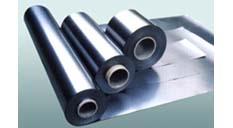

- View as

Graphite Sheet Reinforced With Metal Foil
Boost your sealing solutions with Kaxite Sealing’s Graphite Sheet Reinforced With Metal Foil, a durable high-performance gasket ideal for industrial applications. This product combines flexible graphite with robust metal foil for superior heat resistance and compression, ensuring reliable sealing in demanding environments. Perfect for engineers, manufacturers, and maintenance professionals in automotive, aerospace, and machinery sectors, it enhances efficiency by preventing leaks and reducing downtime. Feel confident with enhanced durability and performance that outperforms standard graphite sheets, thanks to its reinforced design. Experience unmatched reliability—upgrade to Kaxite Sealing's advanced solution today.

Graphite Sheet Reinforced With Tanged Metal
Kaxite Sealing's Graphite Sheet Reinforced With Tanged Metal offers superior sealing and thermal conductivity for industrial applications. Featuring a unique metal-reinforced design, it ensures durability and reliability, ideal for engineers and manufacturers. Experience enhanced performance and confidence in critical systems. Stand out with innovative technology that solves leakage and heat issues effectively.
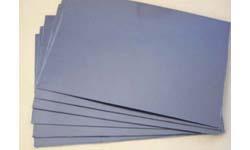
Graphite Sheet Reinforced With Metal Foil
Discover Kaxite Sealing's Graphite Sheet Reinforced With Metal Foil, a cutting-edge sealing solution designed for high-performance applications in industries like automotive, aerospace, and electronics. This product combines flexible graphite with robust metal foil reinforcement, offering superior heat resistance, durability, and airtight sealing even under extreme conditions. Ideal for engineers and manufacturers seeking reliable, long-lasting materials, it solves leakage and wear issues, ensuring peace of mind and enhanced efficiency. Stand out with its unique fusion of lightweight flexibility and metal strength, outperforming standard graphite sheets. Trust Kaxite Sealing for premium quality that delivers results and transforms your projects into success stories.
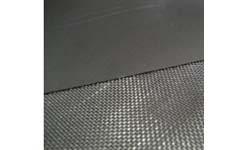
Graphite Sheet Reinforced With Tanged Metal
Discover Kaxite Sealing's Graphite Sheet Reinforced With Tanged Metal: an advanced sealing solution offering superior durability and heat resistance for demanding industrial applications. Its unique tanged metal reinforcement provides unmatched flexibility and strength, perfect for engineers and technicians in high-temperature environments. Experience enhanced reliability and peace of mind—upgrade your sealing performance today with this game-changing innovation.
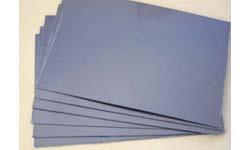
Graphite Sheet Reinforced With Metal Foil
Discover Kaxite Sealing's Graphite Sheet Reinforced With Metal Foil—a durable solution for superior sealing and heat management in industrial applications. Combining graphite's flexibility with metal foil's strength, it ensures reliable performance in high-temperature environments. Ideal for engineers and manufacturers, this product enhances efficiency while solving common sealing issues. Experience unmatched durability and peace of mind with Kaxite Sealing's innovative design. Choose quality—choose reliability.
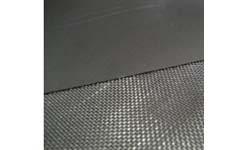
Graphite Sheet Reinforced With Tanged Metal
Kaxite Sealing presents the Graphite Sheet Reinforced With Tanged Metal, a high-performance sealing solution engineered for demanding industrial applications. This innovative product combines durable graphite with robust tang metal for exceptional heat resistance, superior sealing capability, and long-lasting reliability. Ideal for automotive, aerospace, and manufacturing sectors, it ensures leak-proof operations, reduces maintenance downtime, and enhances safety. Users enjoy peace of mind, knowing they've invested in a top-tier solution that outperforms conventional alternatives. Choose Kaxite Sealing for cutting-edge technology that delivers unwavering performance in critical scenarios.


