- Home
- About Us
- Products
- Gaskets
- Braided Packing
- Graphite Packing
- Aramid Packing
- PTFE Packing
- Graphite PTFE Packing
- Carbon Fiber Packing
- Asbsetos Packing
- Ceramic Packing
- Fiberglass Packing
- Acrylic Packing
- Cotton Packing
- Injectable Sealant
- Synthetic Fiber Packing
- Vegetable Fiber Packing
- Mineral Fiber Packing
- Molded Packing Ring
- Die-formed Graphite Ring
- Compression Sheets
- Sealing Materials
- Sealing Machines
- Sealing Tools
- Insulation Products
- PTFE
- Metallic Gaskets
- Fep
- PFA
- News
- Download
- Send Inquiry
- Contact Us

Graphite Gaskets with advanced custom solutions as a leading manufacturer for wholesale buyers
Technical Specifications of Our Graphite Gaskets
Our Graphite gaskets are engineered for exceptional performance across demanding industrial applications. Below is a detailed breakdown of the key parameters that define our premium products.
Core Material Properties
- Base Material: High-purity, exfoliated/expanded graphite.
- Temperature Range: Capable of continuous service from cryogenic temperatures up to 450°C (842°F) in oxidizing atmospheres, and up to 3000°C (5432°F) in non-oxidizing or inert atmospheres.
- Pressure Range: Suitable for sealing pressures up to 200 bar (2900 psi).
- pH Range: Highly chemically inert, performing reliably across a broad pH spectrum from 0 to 14.
- Thermal Conductivity: Excellent, facilitating efficient heat transfer and reducing thermal stress on flanges.
- Creep Relaxation: Exceptionally low, ensuring a stable, long-lasting seal with minimal need for retorquing.
- Compressibility & Recovery: High compressibility (40-60%) and excellent recovery (>50%), allowing the gasket to conform to imperfect flange surfaces and maintain seal under dynamic conditions.
Standard Product Configurations & Dimensions
We offer a comprehensive range of graphite gaskets to suit various standards and custom requirements.
| Style | Description | Available Forms | Common Standards | Thickness Range |
|---|---|---|---|---|
| Flexible Graphite Sheet | Pure graphite foil without reinforcement, offering maximum flexibility and conformability. | Sheets, Rolls, Die-Cut Shapes | ASTM F152, DIN 52913 | 0.25mm - 6.0mm |
| Reinforced Graphite Gasket | Graphite foil laminated with stainless steel inserts (tanged or perforated) for added strength and handling. | Sheets, Die-Cut Gaskets | ASME B16.21, DIN 2690/2691 | 1.5mm, 3.0mm |
| Jacketed Graphite Gasket | Graphite filler fully enclosed in a thin metal jacket (stainless steel, copper). Ideal for aggressive media. | Ring Gaskets, Spiral Wound Fill | ASME B16.20, API 6A | Varies by jacket type |
| Spiral Wound with Graphite Filler | V-shaped metal windings with graphite as the filler material, providing robust, high-integrity sealing. | Ring Gaskets (Inner/Outer Ring options) | ASME B16.20, API 601, EN 1514-1 | Standard: 3.2mm, 4.5mm, 6.0mm |
Performance Data Table
| Property | Test Method | Typical Value | Units |
|---|---|---|---|
| Density (nominal) | ASTM F1315 | 1.0 - 1.1 | g/cm³ |
| Tensile Strength (Reinforced) | ASTM F152 | > 6.0 | MPa |
| Compressibility | ASTM F36 | 40 - 60 | % |
| Recovery | ASTM F36 | > 50 | % |
| Stress Relaxation (after 24h @ 300°C) | ASTM F38 | < 15 | % Loss |
| Thermal Conductivity | ASTM E1461 | 10 - 15 (in-plane) | W/(m·K) |
| Maximum Service Temp (Air) | - | 450 | °C |
| Leak Rate (Helium) | ASTM F37 | < 1.0 x 10⁻⁴ | mbar·l/s |
Graphite Gaskets: Frequently Asked Questions (FAQ)
What are the primary advantages of using graphite gaskets over traditional materials like asbestos or rubber?
Graphite gaskets offer a superior combination of properties: exceptional thermal stability, excellent chemical resistance across most media (except strong oxidizers), outstanding compressibility and recovery leading to low bolt load requirements, and they are creep-resistant, meaning the seal integrity lasts longer without retightening. They are also non-toxic and environmentally friendly, unlike historical asbestos-based seals.
Can graphite gaskets be used in high-temperature oxidizing environments?
While graphite gaskets have an extremely high sublimation point, in the presence of oxygen (air), oxidation becomes a concern above approximately 450°C (842°F). For continuous service in air above this temperature, specially treated oxidation-resistant grades are required. In non-oxidizing atmospheres (e.g., steam, inert gases, reducing environments), they perform reliably at much higher temperatures, up to 3000°C.
Are graphite gaskets suitable for all chemicals and media?
Graphite has outstanding chemical inertness and performs well against a vast range of acids, alkalis, solvents, and hydrocarbons. However, they are not recommended for use with strong oxidizing agents such as concentrated nitric acid, sulfuric acid above 98%, or bromine at high temperatures, as these can rapidly oxidize the graphite. Always consult our chemical resistance chart for specific media compatibility.
What is the difference between flexible graphite sheet and reinforced graphite gaskets?
Flexible graphite sheet is pure, uncompressed graphite foil. It is highly conformable and used for simple flanges, valve bonnets, or as a filler in spiral wound gaskets. Reinforced graphite gaskets have a core of graphite foil laminated with a thin sheet of perforated or tanged metal (usually 316 stainless steel). The reinforcement adds tensile strength, improves handling and dimensional stability, prevents blow-out, and is preferred for larger or higher-pressure flanges.
How do I determine the correct thickness and style of graphite gasket for my application?
Selection depends on flange conditions, media, pressure, and temperature. For standard raised face flanges with moderate conditions, 1.5mm reinforced graphite is common. For higher pressures or uneven surfaces, a 3.0mm gasket provides better sealing. Spiral wound gaskets with graphite filler are used for high-pressure/temperature services in refineries. Always refer to the original equipment manufacturer's specification or consult our engineering team with your flange rating (e.g., ASME 150#), face type, and operating conditions.
Do graphite gaskets require a special surface finish on the flange?
Graphite gaskets are very forgiving and can seal effectively on a variety of surface finishes. A serrated (phonographic) spiral finish (125-250 µin Ra) is typically ideal as it provides micro-grooves for the graphite to flow into, creating an excellent seal. Smooth machined finishes (32-63 µin Ra) also work well. They can even seal on slightly pitted or scratched surfaces where other materials might fail, due to their high conformability.
What is the proper installation procedure for a graphite gasket?
1. Ensure flanges are clean, undamaged, and aligned. 2. Inspect the gasket for damage. 3. Place the gasket centered on the flange. Do not use lubricants or adhesives. 4. Insert and hand-tighten all bolts. 5. Torque bolts in a star-pattern (cross-bolting) sequence to approximately 30% of the final torque value. 6. Repeat the star-pattern sequence at 60% and finally 100% of the specified bolt load. Follow industry standards (e.g., ASME PCC-1) for the specific torque values based on bolt size, grade, and gasket type. Avoid over-torquing, which can crush the graphite.
How do I store graphite gaskets to ensure their longevity?
Store graphite gaskets in their original packaging in a cool, dry, and clean environment away from direct sunlight, moisture, and corrosive fumes. Keep them flat and avoid stacking heavy objects on top to prevent deformation. Reinforced and jacketed gaskets are more robust for storage. Flexible graphite sheets should be stored on a flat shelf or rolled with a large diameter core to prevent creasing.

- View as

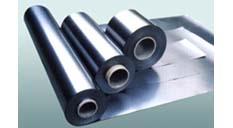
Graphite Gasket Reinforced With Metal Foil
Kaxite Sealing's Graphite Gasket Reinforced With Metal Foil offers superior sealing for demanding industries like chemical and oil & gas. Featuring robust graphite and durable metal foil, it ensures exceptional leak resistance under high temperatures and pressures. Ideal for engineers and maintenance teams, this gasket solves critical fluid containment challenges, delivering peace of mind and enhanced operational safety. Its unique reinforced design outperforms standard gaskets, providing unmatched reliability. Trust Kaxite Sealing for top-tier sealing solutions—upgrade your equipment today for peak performance and long-term durability.

Pure Expanded Graphite Gasket
Kaxite Sealing's Pure Expanded Graphite Gasket is a superior sealing solution designed for industrial applications. Made from high-purity expanded graphite, it excels in extreme temperatures and corrosive environments, offering exceptional durability and leak-proof performance. Ideal for engineers and manufacturers in chemical, petrochemical, and power generation fields, this gasket ensures safety and reliability, reducing maintenance costs. Its unique flexible structure adapts to irregular surfaces, outperforming traditional materials. Experience peace of mind with Kaxite's commitment to quality—upgrade to reliable sealing today.

Graphite Gasket Reinforced With Metal Mesh
Kaxite Sealing's Graphite Gasket Reinforced With Metal Mesh is a high-performance sealing solution designed for demanding industrial applications, combining graphite flexibility with metal mesh strength for superior leak resistance. Ideal for engineers and maintenance professionals in chemical or oil industries, it ensures reliable operation, reduces downtime, and offers unmatched durability compared to standard gaskets. Experience confidence in every seal—choose Kaxite Sealing for top-tier quality and performance.

Tanged Metal Reinforced Graphite Gasket
Discover Kaxite Sealing's Tanged Metal Reinforced Graphite Gasket, an industrial sealing solution designed to handle extreme pressures and temperatures with superior durability. This gasket features a unique tanged metal design for enhanced strength, ideal for harsh environments like chemical processing or power plants. Its graphite core ensures reliable sealing, reducing downtime and maintenance costs. For engineers and industries seeking a robust, long-lasting gasket that outperforms standard options, experience the peace of mind and efficiency that comes with Kaxite Sealing's advanced technology.


