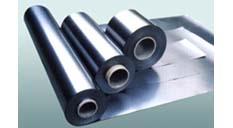
Unmatched Performance with Ptfe Teflon Film: The Ultimate Material Solution
In the demanding world of high-performance materials, few names carry as much weight as PTFE, commonly known by the brand name Teflon. Ptfe Teflon Film represents a pinnacle of engineered fluoropolymer films, offering an exceptional combination of properties that make it indispensable across countless industries. From aerospace and electronics to food processing and medical devices, this versatile film solves complex engineering challenges where other materials fail. Its near-universal chemical resistance, extreme temperature tolerance, and outstanding dielectric strength are just the beginning of its capabilities. For engineers, designers, and procurement specialists seeking reliability under the most severe conditions, understanding the specifications and applications of Ptfe Teflon Film is crucial for innovation and product integrity.
Core Material Properties and Advantages
PTFE (Polytetrafluoroethylene) is a synthetic fluoropolymer renowned for its inertness and stability. The film form leverages these inherent properties into a thin, flexible, and consistent format. The primary advantages that define its utility include:
- Exceptional Chemical Resistance: Inert to virtually all industrial chemicals, solvents, and acids, making it ideal for gaskets, seals, and linings in corrosive environments.
- Wide Temperature Range: Performs reliably from cryogenic temperatures as low as -270°C (-454°F) up to a continuous +260°C (+500°F), with short-term tolerance even higher.
- Superb Dielectric Properties: Possesses an extremely high dielectric strength and a low dielectric constant, making it a premier choice for electrical insulation in cables, capacitors, and PCBs.
- Low Coefficient of Friction: Has the lowest coefficient of friction of any known solid material, providing excellent non-stick and release properties.
- Hydrophobicity & Weather Resistance: Water-repellent and completely unaffected by UV exposure or weathering, ensuring long-term outdoor performance.
- Biocompatibility: Meets USP Class VI standards and is FDA-compliant for food contact, allowing use in medical implants and food processing equipment.
Detailed Product Specifications and Data
Our Ptfe Teflon Film is manufactured to the highest purity and consistency standards. It is available in skived (calendered and sliced) and cast film forms to suit different application needs. Below are the detailed technical parameters.
Standard Physical & Mechanical Properties
| Property | Test Method | Typical Value (Skived Film) | Typical Value (Cast Film) | Unit |
|---|---|---|---|---|
| Density | ASTM D792 | 2.15 - 2.20 | 2.15 - 2.18 | g/cm³ |
| Tensile Strength | ASTM D638 | 20 - 35 | 15 - 25 | MPa |
| Elongation at Break | ASTM D638 | 200 - 400 | 250 - 500 | % |
| Dielectric Strength | ASTM D149 | 100 - 240 | 80 - 200 | kV/mm |
| Dielectric Constant @ 1MHz | ASTM D150 | 2.0 - 2.1 | 2.0 - 2.1 | - |
| Dissipation Factor @ 1MHz | ASTM D150 | < 0.0002 | < 0.0002 | - |
| Continuous Service Temperature | - | -270 to +260 | -270 to +260 | °C |
| Coefficient of Friction (Dynamic) | ASTM D1894 | 0.05 - 0.08 | 0.05 - 0.08 | - |
| Water Absorption | ASTM D570 | < 0.01 | < 0.01 | % |
Available Size and Thickness Configuration
| Parameter | Standard Range | Customizable Options |
|---|---|---|
| Thickness | 0.025mm (0.001") to 3.0mm (0.118") | Yes, specific tolerances available |
| Width | Up to 1500mm (59") for skived film; Up to 2000mm (78") for cast film | Yes, can be slit to precise widths |
| Length | Rolls or sheets as required | Custom roll lengths, sheet sizes |
| Color | Natural white (opaque), clear/translucent | Pigmented colors upon request (may affect properties) |
| Surface Finish | One side shiny / one side matt (skived), Two side shiny (cast) | Can be corona or chemically treated for adhesion |
Primary Industrial Applications
The unique property profile of Ptfe Teflon Film makes it the material of choice for critical functions in diverse sectors:
- Electrical & Electronics: High-frequency insulation, flexible printed circuit (FPC) base films, coil insulation, capacitor dielectrics, and wire wrapping.
- Chemical Processing: Linings for tanks, pipes, and vessels; gaskets, seals, and diaphragm for pumps and valves handling aggressive media.
- Aerospace & Defense: Radome covers (microwave transparent), wire and cable insulation in aircraft, and protective covers for sensitive components.
- Food & Pharmaceutical: Non-stick conveyor belt liners, release sheets for drying, heat-sealing jaws covers, and sanitary gasketing.
- Industrial Machinery: Low-friction bearing pads, slide plates, wear strips, and protective covers for cutting surfaces.
- Medical Technology: Substrates for biosensors, insulating layers in medical electronics, and components for diagnostic equipment.
Frequently Asked Questions (FAQ) About Ptfe Teflon Film
General and Material Questions
What is the difference between PTFE and Teflon?
Teflon is a brand name for PTFE (Polytetrafluoroethylene), a specific type of fluoropolymer, owned by Chemours (formerly DuPont). While "Teflon" is often used generically, it technically refers to that company's PTFE products. Our PTFE film is manufactured to the same high-performance standards and material specifications.
What are the key limitations of PTFE film?
While excellent in many areas, PTFE film has a few limitations. It has relatively low mechanical strength and wear resistance compared to some engineering plastics, can cold flow (creep) under sustained heavy load, and is difficult to bond without specialized surface treatment (like sodium etching or plasma treatment). It is also not suitable for applications involving molten alkali metals or certain fluorine compounds at high temperatures.
Is PTFE film safe for food contact and medical use?
Yes, pure, virgin PTFE is FDA-compliant for food contact and can meet USP Class VI standards for medical device applications. It is biologically inert and does not leach harmful substances. It is critical to ensure the film is manufactured from food-grade or medical-grade virgin resin without any reprocessed or contaminated material.
Technical and Application Questions
How do I choose between skived PTFE film and cast PTFE film?
The choice depends on your application requirements. Skived film is produced from a compressed billet and sliced into thin sheets. It offers superior dimensional stability, higher tensile strength, and better thickness consistency, making it ideal for precision gaskets, seals, and electrical insulation. Cast film is made from a PTFE dispersion and has a smoother surface, higher elongation, and is often more cost-effective for large-area applications like release liners or conveyor belts.
What is the maximum continuous operating temperature for PTFE film?
PTFE film can operate continuously at temperatures from -270°C (-454°F) up to +260°C (+500°F) without significant degradation of its core properties. For short-term exposure, it can tolerate peaks up to 300°C (572°F). Prolonged exposure above 260°C will begin to slowly degrade the polymer, reducing mechanical properties over time.
Can PTFE film be heat sealed, welded, or bonded to other materials?
PTFE cannot be heat-sealed or welded to itself using conventional thermal methods because it does not melt (it transitions to a gel state above 327°C). Bonds are typically achieved through mechanical fastening, using adhesives on treated surfaces, or through specialized processes like thermal lamination with a fusible intermediate layer. The film surface often requires treatment to achieve acceptable adhesive bond strength.
How does PTFE film perform as an electrical insulator?
PTFE film is one of the best dielectric materials available. It combines an extremely high dielectric strength (resistance to electrical breakdown), a very low and stable dielectric constant (minimizing signal loss and capacitance), and an exceptionally low dissipation factor (minimizing energy loss as heat). These properties remain stable across a wide frequency and temperature range, making it perfect for high-frequency, high-speed, and high-temperature electronics.
Handling and Sourcing Questions
What tolerances can be held on thickness and dimensions?
Standard commercial tolerances for skived film are typically ±10% of the nominal thickness. However, for precision applications, we can produce films with tighter tolerances, such as ±5% or even ±0.001mm for critical dimensions, depending on the thickness range. Width and length can be slit and cut to very precise specifications with minimal deviation.
Is custom-colored or composite PTFE film available?
Yes, we offer customization services. PTFE film can be pigmented in various colors, though adding pigments can sometimes slightly alter electrical or mechanical properties. We also produce composite films, such as PTFE laminated with other materials (e.g., glass cloth, polyester, silicone rubber) or films with pressure-sensitive adhesive (PSA) backings, to create multi-functional materials tailored to specific assembly or performance needs.
How should PTFE film be stored and handled?
Store PTFE film in a cool, dry place away from direct sunlight and dust. It should be kept flat or on a core to prevent curling or creasing. Handle with clean gloves to prevent contamination from skin oils. While chemically resistant, it is a soft material and can be scratched or damaged by sharp objects, so care should be taken during fabrication and installation.