- Home
- About Us
- Products
- Gaskets
- Braided Packing
- Graphite Packing
- Aramid Packing
- PTFE Packing
- Graphite PTFE Packing
- Carbon Fiber Packing
- Asbsetos Packing
- Ceramic Packing
- Fiberglass Packing
- Acrylic Packing
- Cotton Packing
- Injectable Sealant
- Synthetic Fiber Packing
- Vegetable Fiber Packing
- Mineral Fiber Packing
- Molded Packing Ring
- Die-formed Graphite Ring
- Compression Sheets
- Sealing Materials
- Sealing Machines
- Sealing Tools
- Insulation Products
- PTFE
- Metallic Gaskets
- Fep
- PFA
- News
- Download
- Send Inquiry
- Contact Us

Quality Gasket Solutions for Custom OEM Manufacturing and Wholesale Supply
What Are Gaskets and Why Are They Critical?
A gaskets is a mechanical seal designed to fill the space between two or more mating surfaces, preventing leakage of fluids or gases under compression. These essential components are ubiquitous in engineering, found in applications ranging from automotive engines and industrial pipelines to pharmaceutical equipment and aerospace systems. Their primary function is to create a static seal, which means they seal components that do not move relative to each other. The failure of a gasket can lead to system inefficiency, environmental hazards, safety risks, and costly downtime, making their selection and specification a critical engineering decision.
Key Material Types and Their Applications
Selecting the correct gasket material is paramount for performance and longevity. The material must be compatible with the operating media (chemical resistance), temperature range, and pressure. Here are the most common types:
- Non-Metallic (Soft) Gaskets: Made from materials like compressed non-asbestos fiber (CNAF), rubber (NBR, EPDM, Viton®), PTFE, and graphite. Ideal for lower pressure/temperature applications and provides excellent conformability.
- Metallic Gaskets: Constructed from metals like stainless steel, copper, or nickel alloys. Used in high-pressure, high-temperature (HPHT) applications such as reactors, heat exchangers, and oil & gas pipelines.
- Composite Gaskets: A combination of metal and non-metal materials (e.g., spiral wound gaskets, metal jacketed gaskets). They offer the resilience of soft materials with the strength and temperature resistance of metals, making them versatile for a wide range of industrial uses.
Comprehensive Product Parameters and Specifications
Our gaskets are engineered to meet exacting standards. Below are the detailed parameters that define our product range. These specifications are crucial for ensuring compatibility and optimal performance in your specific application.
Standard Material Properties Table
| Material | Temperature Range (°C) | Pressure Range (Bar) | pH Resistance | Common Applications |
|---|---|---|---|---|
| Compressed Non-Asbestos (CNAF) | -40 to +400 | Up to 100 | 2 - 12 | Water, steam, general chemical |
| Nitrile Rubber (NBR) | -30 to +100 | Up to 25 | Oil, fuel, water | Automotive, fuel systems |
| Fluoroelastomer (FKM/Viton®) | -20 to +200 | Up to 30 | 0 - 14 (excellent) | Aggressive chemicals, aerospace |
| Expanded PTFE | -240 to +260 | Up to 150 | 0 - 14 (universal) | Pharmaceutical, food & beverage |
| Flexible Graphite | -200 to +500 (inert atm.) | Up to 200 | 0 - 14 (except strong oxidizers) | Heat exchangers, exhaust systems |
| 304 Stainless Steel Spiral Wound | -250 to +540 | Up to 250 | Excellent | Refineries, power generation |
Standard Dimensions & Compliance List
Our gaskets are manufactured to precise dimensions, ensuring a perfect fit. Key dimensional parameters include:
- Inner Diameter (ID): Match to the pipe or bolt size. Tolerances typically held to +/- 0.5mm.
- Outer Diameter (OD): Determines the sealing surface coverage. Tolerances typically held to +/- 0.8mm.
- Thickness: Standard thicknesses range from 1.5mm (1/16") to 3.0mm (1/8"). Custom thicknesses available.
- Bolt Hole Pattern & Diameter: Conforms to ASME, DIN, JIS, or custom flange specifications.
- Standards Compliance: Our products are designed and tested to meet global standards:
- ASME B16.20 & B16.21 (Metallic & Non-Metallic Gaskets)
- DIN EN 1514 & DIN 2690 (European Flange Standards)
- API 6A & 601 (Oil & Gas Applications)
- ISO 9001:2015 Quality Management Systems
Gaskets: Frequently Asked Questions (FAQ)
Q: How do I choose the right gasket material for my application?
A: Selecting the right gasket involves a careful analysis of four key factors: the media being sealed (its chemical composition), the operating temperature, the system pressure, and the flange type/surface finish. Always consult chemical compatibility charts for the media. For high-temperature steam, graphite or PTFE are excellent. For aggressive acids at moderate temperatures, Viton® or PTFE may be suitable. For high-pressure/temperature joints in refineries, spiral wound gaskets are the standard. When in doubt, provide your application details to our technical team for a recommendation.
Q: What is the difference between a gasket and an O-ring?
A: Both are sealing devices, but they function differently. A gasket is typically used to create a static seal between flat, stationary surfaces like pipe flanges or machine housings. It is compressed across its entire face. An O-ring is an elastomeric loop with a circular cross-section designed to fit into a machined groove, creating a seal in dynamic (moving) or static applications, often in hydraulic or pneumatic cylinders. Gaskets cover larger, often irregular, sealing areas, while O-rings are used for contained, radial sealing.
Q: How tight should I torque the bolts when installing a gasket?
A: Correct bolt torque is critical. Under-torquing can lead to leakage; over-torquing can crush the gasket, damage flanges, or cause stress cracking. The optimal torque value depends on the gasket material, size, bolt grade, and flange type. Manufacturers provide torque specifications. A general best practice is to use a calibrated torque wrench and follow a cross-pattern tightening sequence (star pattern) in multiple incremental steps (e.g., 30%, 60%, 100% of final torque) to ensure even compression and prevent flange distortion.
Q: Can I re-use a gasket after disassembly?
A: It is strongly discouraged and generally considered poor practice. Once compressed, a gasket undergoes plastic deformation to conform to the flange imperfections. Upon removal, it loses its resilience and sealing ability. Re-using an old gasket almost always results in a leak path. For critical applications, it is a safety and reliability requirement to always install a new, unused gasket during re-assembly.
Q: What causes a gasket to fail prematurely?
A: Premature failure can stem from several root causes: Material Incompatibility: Chemical attack from the media swells, degrades, or dissolves the gasket. Improper Installation: Incorrect torque, uneven bolt loading, or misalignment. Exceeding Design Limits: Subjecting the gasket to temperatures or pressures beyond its rating. Flange Condition: Sealing on damaged, warped, or improperly finished flange faces. Thermal Cycling: Frequent heating and cooling can cause stress fatigue in some materials.
Q: What are spiral wound gaskets, and where are they used?
A: A spiral wound gasket is a semi-metallic composite gasket. It is constructed by winding a pre-formed metal strip (usually V-shaped) and a soft filler material (like graphite or PTFE) alternately around a center ring. This creates a resilient, layered structure. They are primarily used for high-pressure, high-temperature applications in the oil and gas, petrochemical, and power industries, particularly on raised face (RF) and ring-type joint (RTJ) flanges. Their design allows for excellent recovery and sealing under variable loads.

- View as

Copper Head Gasket
Kaxite Sealing's Copper Head Gasket offers superior sealing with its durable copper core, ideal for automotive engines. It enhances performance and reliability, preventing leaks and ensuring a smooth ride—trusted by mechanics and enthusiasts alike for its unmatched quality and lasting peace of mind.
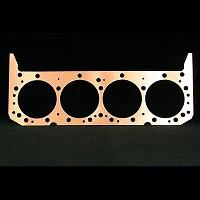
Copper Head Gasket
Upgrade your engine with the Copper Head Gasket from Kaxite Sealing—designed for peak performance. This premium gasket, crafted from durable copper, ensures a secure, leak-free seal in high-temperature environments, perfect for automotive enthusiasts and professional mechanics. Its superior design prevents overheating and enhances engine longevity, providing peace of mind with every drive. What sets it apart is Kaxite's precision engineering for unmatched reliability, making it the smart choice for a smoother, more efficient ride. Choose Kaxite Sealing today and experience the difference in durability and performance.
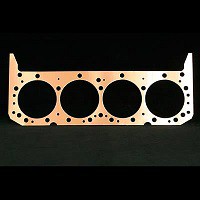
Copper Head Gasket
Upgrade your engine with the Copper Head Gasket by Kaxite Sealing, a durable solution for superior heat resistance and sealing. Crafted from high-quality copper, it ensures optimal performance and longevity, ideal for automotive enthusiasts and mechanics tackling demanding conditions. Feel the confidence of a leak-free, efficient engine, offering unmatched reliability over standard gaskets. Trust Kaxite Sealing for precision engineering that powers your drive forward.

Copper Head Gasket
Kaxite Sealing’s Copper Head Gasket is a premium sealing solution for engines, designed to withstand extreme temperatures and pressure. Its durable copper construction ensures a tight, reliable seal, preventing leaks and enhancing engine performance. Ideal for automotive enthusiasts, mechanics, and DIY users in demanding repair or high-performance scenarios, this gasket delivers peace of mind with superior durability. Unlike standard alternatives, it excels in heat resistance and longevity, solving common sealing failures. Trust Kaxite Sealing for quality—experience enhanced efficiency and reliability in your vehicle today.

Synthetic Fiber Rubber Gasket
Kaxite Sealing's Synthetic Fiber Rubber Gasket offers superior durability and leak-proof performance for industrial and automotive applications. Engineered with advanced synthetic fibers, it withstands extreme temperatures and pressures, ensuring reliable sealing. Ideal for engineers and maintenance professionals, it delivers peace of mind and cost savings by preventing costly downtime. Unlike traditional gaskets, its unique blend enhances resilience and longevity. Trust Kaxite Sealing for quality that seals your success—every time.

Rubber Gasket
Kaxite Sealing's Rubber Gasket offers superior leak-proof protection for pipes, machinery, and industrial equipment. Crafted from high-quality, durable rubber, it ensures long-lasting performance even in extreme conditions, ideal for engineers, mechanics, and manufacturers. Experience peace of mind with reliable sealing that prevents costly downtime. Unlike others, our gasket features advanced molding for a perfect fit. Trust Kaxite Sealing for unmatched quality that keeps your operations smooth.


