- Home
- About Us
- Products
- Gaskets
- Braided Packing
- Graphite Packing
- Aramid Packing
- PTFE Packing
- Graphite PTFE Packing
- Carbon Fiber Packing
- Asbsetos Packing
- Ceramic Packing
- Fiberglass Packing
- Acrylic Packing
- Cotton Packing
- Injectable Sealant
- Synthetic Fiber Packing
- Vegetable Fiber Packing
- Mineral Fiber Packing
- Molded Packing Ring
- Die-formed Graphite Ring
- Compression Sheets
- Sealing Materials
- Sealing Machines
- Sealing Tools
- Insulation Products
- PTFE
- Metallic Gaskets
- Fep
- PFA
- News
- Download
- Send Inquiry
- Contact Us

Best Customized PTFE Sheets Manufacturing and Wholesale Solutions from China
PTFE Sheets, also known as Teflon® sheets or polytetrafluoroethylene sheets, are high-performance, versatile engineered materials prized for their unique combination of properties. These sheets are manufactured from PTFE resin, a fluoropolymer renowned for its exceptional chemical resistance, outstanding non-stick characteristics, wide operational temperature range, and excellent dielectric properties. As a critical component in countless industrial, commercial, and even domestic applications, understanding their specifications, grades, and capabilities is paramount for engineers, designers, and procurement specialists.
The fundamental appeal of PTFE sheets lies in their inertness. They are virtually unaffected by almost all industrial chemicals and solvents, making them ideal for gaskets, seals, and linings in aggressive environments. Their extremely low coefficient of friction provides superior non-stick and release properties, essential in food processing, packaging, and composite molding. Furthermore, they maintain flexibility and functionality across a temperature spectrum from cryogenic levels up to +260°C (+500°F) continuously, with short-term tolerance even higher.
To select the correct PTFE sheet for an application, one must delve into its key parameters. These sheets are available in various forms, including virgin, glass-filled, carbon-filled, bronze-filled, and stainless-steel-filled, each modifying the base PTFE properties to enhance specific characteristics like creep resistance, wear resistance, thermal conductivity, or compressive strength.
### Key Product Parameters and Specifications
The performance of a PTFE sheet is defined by a set of standard physical, thermal, and electrical properties. Below is a detailed breakdown.
**Standard Physical & Mechanical Properties of Virgin PTFE Sheets:**
| Property | Test Method | Typical Value / Range | Unit |
| :--- | :--- | :--- | :--- |
| **Density** | ASTM D792 | 2.14 - 2.20 | g/cm³ |
| **Tensile Strength** | ASTM D638 | 20 - 35 | MPa (psi) |
| **Elongation at Break** | ASTM D638 | 200 - 400 | % |
| **Compressive Strength** | ASTM D695 | 12 - 15 | MPa |
| **Flexural Modulus** | ASTM D790 | 550 - 700 | MPa |
| **Hardness, Durometer** | ASTM D2240 | D50 - D60 | Shore D |
| **Coefficient of Friction (Dynamic)** | ASTM D1894 | 0.05 - 0.10 | - |
| **Water Absorption** | ASTM D570 | < 0.01 | % |
**Thermal & Electrical Properties:**
| Property | Test Method | Typical Value / Range | Unit |
| :--- | :--- | :--- | :--- |
| **Continuous Service Temperature** | - | -196 to +260 | °C |
| **Short-Term Max Temperature** | - | Up to +300 | °C |
| **Thermal Conductivity** | ASTM C177 | 0.25 | W/(m·K) |
| **Coefficient of Linear Thermal Expansion** | ASTM D696 | 120 x 10⁻⁶ | /°C |
| **Dielectric Strength** | ASTM D149 | 20 - 40 | kV/mm |
| **Dielectric Constant (1MHz)** | ASTM D150 | 2.0 - 2.1 | - |
| **Dissipation Factor (1MHz)** | ASTM D150 | < 0.0002 | - |
**Available Grades and Their Primary Enhancements:**
PTFE sheets are rarely used in pure virgin form for mechanical applications due to their tendency to creep (cold flow) under load. Fillers are added to create composite materials with improved performance.
* **Virgin PTFE:** Highest purity, best chemical and electrical properties, translucency. Used for linings, seals in ultra-pure systems, and electrical insulation.
* **Glass-Filled PTFE (e.g., 15%, 25%):** Improved compressive strength, reduced creep and wear, better dimensional stability. Good for heavy-duty gaskets, thrust washers, and bushings.
* **Carbon-Filled PTFE:** Enhanced wear resistance, lower friction, improved thermal conductivity, provides static dissipation. Common in seals and bearings.
* **Bronze-Filled PTFE (e.g., 40%, 60%):** Greatly improved thermal conductivity, superior wear resistance, and high compressive strength. Ideal for bearing pads and wear plates.
* **Stainless Steel Filled PTFE:** High compressive strength, excellent wear resistance, and improved thermal conductivity. Used in high-load applications.
* **MoS2 (Molybdenum Disulfide) Filled PTFE:** Further reduces friction and improves wear properties.
* **FDA-Compliant Grades:** Formulated with approved additives for use in food, beverage, and pharmaceutical contact applications.
**Standard Size and Thickness Availability:**
PTFE sheets are typically supplied in standard sheet sizes and can be precision machined or die-cut to custom shapes.
* **Common Sheet Sizes:** 1000mm x 1000mm, 1200mm x 1200mm, 4' x 4', 5' x 5', and rolls for thin films.
* **Standard Thickness Range:** From very thin films (0.05mm / 0.002") up to thick slabs (100mm / 4" and beyond).
* **Common Thicknesses (mm):** 0.5, 1, 1.5, 2, 3, 4, 5, 6, 8, 10, 12, 16, 20, 25, 30, 40, 50.
* **Common Thicknesses (inches):** 1/16", 1/8", 1/4", 3/8", 1/2", 3/4", 1", 1.5", 2".
### Frequently Asked Questions (FAQ) About PTFE Sheets
**What is the main difference between PTFE and Teflon?**
Teflon is a brand name for PTFE (polytetrafluoroethylene) and other fluoropolymers owned by Chemours (formerly DuPont). PTFE is the generic chemical name. All Teflon is PTFE, but not all PTFE is branded as Teflon. They refer to the same base material with identical core properties.
**Can PTFE sheets be machined or fabricated easily?**
Yes, PTFE and its filled compounds are relatively soft and can be easily machined using standard woodworking or metalworking tools, though sharp tools and proper clamping are essential to avoid deformation. Processes include cutting, drilling, turning, milling, and skiving (for creating tapes). Coolant is often not required.
**What are the limitations of PTFE sheets?**
The primary limitations are creep (cold flow) under sustained load, relatively low mechanical strength compared to metals, and poor resistance to abrasion in pure form. It also has a high thermal expansion coefficient and cannot be melt-processed like conventional plastics. These limitations are often mitigated by using filled grades.
**Are PTFE sheets safe for food contact and medical use?**
Virgin PTFE is biologically inert and non-toxic. For regulated food contact and medical applications, it is crucial to use specifically formulated FDA-compliant or USP Class VI grades that use approved pigments and processing aids. The safety of PTFE in cookware at normal cooking temperatures is well-established.
**How do I choose between virgin and filled PTFE sheets?**
Select virgin PTFE for maximum chemical resistance, electrical insulation, or purity. Choose a filled grade when mechanical performance is critical: glass or bronze for load-bearing components like bearings and gaskets; carbon for wear parts and static control; stainless steel for the highest compressive strength.
**What is the maximum continuous operating temperature for PTFE sheets?**
PTFE sheets can be used continuously from -196°C (-320°F) up to +260°C (+500°F) without significant degradation. For short-term exposure, they can tolerate peaks up to 300°C (572°F). Prolonged exposure above 260°C will begin to degrade the polymer.
**Can PTFE sheets be bonded or welded to other materials?**
Bonding PTFE is notoriously difficult due to its non-stick nature. It requires specialized surface treatments such as sodium etching (naphthalene process) or plasma treatment to create a bondable surface. For permanent metal backing, it can be chemically etched and then bonded with specialized adhesives.
**How does PTFE compare to other plastics like UHMW-PE or Nylon in sheet form?**
PTFE has superior chemical and high-temperature resistance, a lower friction coefficient, and better dielectric properties than UHMW-PE or Nylon. However, UHMW-PE offers much better abrasion resistance and impact strength at room temperature, while Nylon has higher mechanical strength and rigidity. The choice depends entirely on the application's priority.
**What industries commonly use PTFE sheets?**
They are ubiquitous across industry: chemical processing (linings, gaskets), electrical & semiconductor (insulators, coil bobbins), food & pharmaceutical (conveyor belts, release sheets), automotive/aerospace (seals, bearings), mechanical engineering (wear plates, slide bearings), and construction (expansion joint liners).
**How should PTFE sheets be stored and handled?**
Store sheets in a cool, dry place away from direct sunlight and heat sources. They should lie flat to prevent curling or bending. While chemically resistant, they should be kept clean from dust and grit which can embed into the soft surface. Use appropriate handling to avoid surface scratches.

- View as

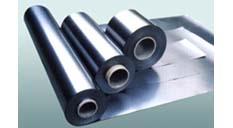
Pure PTFE Sheet
Discover Kaxite Sealing's Pure PTFE Sheet, engineered for superior sealing solutions. This high-performance material excels in chemical resistance, temperature tolerance, and durability, ideal for industrial applications. Experience unmatched reliability and long-lasting performance with our premium product.

Modified PTFE Sheet
Kaxite Sealing presents the Modified PTFE Sheet, a high-performance sealing material engineered for demanding industrial applications. Featuring enhanced durability and superior chemical resistance, it ensures reliable sealing in harsh environments like chemical processing and machinery. Ideal for engineers and manufacturers, this product reduces maintenance needs and boosts operational efficiency, offering a cost-effective solution compared to standard PTFE. Experience peace of mind with Kaxite Sealing's innovation-driven quality.

Etched PTFE Sheet
Discover Kaxite Sealing's Etched PTFE Sheet: a versatile, durable solution for superior sealing and insulation in industrial applications. Its etched surface ensures enhanced adhesion, outperforming standard PTFE with reliable performance in harsh environments. Ideal for engineers and manufacturers, it simplifies maintenance and boosts efficiency. Trust Kaxite Sealing for quality that delivers peace of mind.

Filled PTFE Sheet
Discover Kaxite Sealing's Filled PTFE Sheet, engineered for superior performance in demanding industrial applications. This durable material excels with enhanced wear resistance and low friction, ideal for seals and gaskets in harsh environments. It solves leakage issues, boosts operational efficiency, and offers long-term reliability, setting it apart from standard alternatives. Perfect for engineers and manufacturers seeking robust, cost-effective solutions.

Skived PTFE Sheet
Discover Kaxite Sealing's Skived PTFE Sheet, a premium solution for superior sealing and insulation in demanding industrial and mechanical applications. Crafted from high-quality PTFE, this sheet offers exceptional chemical resistance, low friction, and durability, ensuring reliable performance in harsh environments. Ideal for engineers, manufacturers, and maintenance professionals, it excels in gaskets, liners, and protective covers, solving leaks and wear issues with ease. Its skived manufacturing process provides precise thickness and consistency, setting it apart from competitors. Experience enhanced efficiency and peace of mind—upgrade your projects with our trusted product today.


