- Home
- About Us
- Products
- Gaskets
- Braided Packing
- Graphite Packing
- Aramid Packing
- PTFE Packing
- Graphite PTFE Packing
- Carbon Fiber Packing
- Asbsetos Packing
- Ceramic Packing
- Fiberglass Packing
- Acrylic Packing
- Cotton Packing
- Injectable Sealant
- Synthetic Fiber Packing
- Vegetable Fiber Packing
- Mineral Fiber Packing
- Molded Packing Ring
- Die-formed Graphite Ring
- Compression Sheets
- Sealing Materials
- Sealing Machines
- Sealing Tools
- Insulation Products
- PTFE
- Metallic Gaskets
- Fep
- PFA
- News
- Download
- Send Inquiry
- Contact Us

Custom Ptfe Teflon Gaskets from a Leading Manufacturer in China
Discover the Unmatched Sealing Power of Ptfe Teflon Gaskets
In the demanding world of industrial sealing, the choice of material is paramount. For over half a century, Polytetrafluoroethylene (PTFE), widely known by its brand name Teflon®, has set the gold standard. Ptfe Teflon Gaskets represent a pinnacle in sealing technology, offering a nearly unbeatable combination of chemical resistance, thermal stability, and low friction. These gaskets are engineered to perform in environments where other materials fail, ensuring leak-free operation, enhancing safety, and reducing long-term maintenance costs across countless applications.
The unique molecular structure of PTFE grants it exceptional properties. Its carbon-fluorine bonds are among the strongest in organic chemistry, resulting in a material that is inert to almost all chemicals, can withstand extreme temperatures, and exhibits outstanding dielectric properties. Whether you are sealing aggressive acids in chemical processing, high-purity fluids in pharmaceutical manufacturing, or high-temperature steam in power generation, PTFE Teflon gaskets provide reliable, long-lasting performance.
Unrivaled Product Specifications and Material Properties
To truly appreciate the capability of PTFE Teflon gaskets, one must examine their detailed specifications. Our gaskets are manufactured from 100% virgin PTFE resin or specified compounds to ensure consistency and performance. Below is a comprehensive breakdown of the key material properties and standard product specifications.
Key Material Properties of PTFE
- Chemical Resistance: Inert to virtually all industrial chemicals and solvents, including strong acids, bases, and halogens. It is unaffected by moisture and does not dissolve in any known solvent below 300°C (572°F).
- Temperature Range: Excellent thermal stability from -200°C (-328°F) to +260°C (+500°F) continuously, with short-term peaks up to 300°C (572°F).
- Non-Stick & Low Friction: Possesses the lowest coefficient of friction of any solid material, preventing material build-up and ensuring easy release.
- Electrical Properties: Outstanding dielectric strength and insulation resistance, making it ideal for electrical applications.
- Weatherability & UV Resistance: Completely unaffected by outdoor exposure, ozone, and UV radiation.
- Flame Resistance: Inherently non-flammable; it will not burn in air and meets various flame retardancy standards.
- FDA & USP Class VI Compliance: Available in grades suitable for food, beverage, and pharmaceutical contact, complying with relevant FDA and USP regulations.
Standard Product Specifications
Our PTFE Teflon gaskets are available in a wide range of forms to suit specific application needs. Standard specifications are detailed in the table below.
| Parameter | Specification / Range | Standard (ASTM/ISO) | Notes |
|---|---|---|---|
| Material Grade | Virgin PTFE, Glass-filled, Carbon-filled, Graphite-filled, Stainless Steel Insert | ASTM D4894, D4895 | Fillers enhance creep resistance, wear, and compression. |
| Form | Sheet, Tape, Cord, Skived Film, Molded, CNC Machined | - | Available as cut sheets, full-face, ring-type (RA/RB), or custom profiles. |
| Standard Sheet Thickness | 0.5mm (0.020") to 10mm (0.394") | - | Custom thicknesses available upon request. |
| Density | 2.14 - 2.20 g/cm³ (Virgin) | ASTM D792 | Density varies with filler type and percentage. |
| Tensile Strength | 25 - 35 MPa (Virgin) | ASTM D638 | Fillers can significantly increase tensile strength. |
| Elongation at Break | 300 - 500% (Virgin) | ASTM D638 | Demonstrates high ductility. |
| Compression Set (22 hrs @ 25°C) | 40 - 50% | ASTM D395 | Filled compounds offer improved creep resistance. |
| PV Limit (Dry) | 10,000 psi-ft/min | - | Excellent for bearing and wear applications. |
| Color | White (Virgin), Black (Carbon), Brown (Graphite), Off-White (Glass) | - | Color is indicative of filler material. |
| Standard Dimensions (Sheets) | 1m x 1m, 1.2m x 1.2m, 1.5m x 1.5m | - | Other sizes can be custom cut. |
Frequently Asked Questions (FAQ) About Ptfe Teflon Gaskets
What is the primary difference between PTFE and Teflon?
PTFE (Polytetrafluoroethylene) is the generic name of the synthetic fluoropolymer. Teflon is the most well-known brand name for PTFE, owned by Chemours (formerly DuPont). When we refer to Teflon gaskets, we are specifically referring to high-quality PTFE gaskets made from or equivalent to the original Teflon® resins. In industrial contexts, the terms are often used interchangeably, but "PTFE" is the universal technical material designation.
Can PTFE Teflon gaskets be used for high-pressure applications?
While PTFE has excellent chemical and thermal properties, virgin PTFE is subject to "cold flow" or creep under sustained high load. For high-pressure flange connections, it is often recommended to use modified PTFE. This includes filled compounds (with glass, carbon, or graphite) which dramatically improve creep resistance and load-bearing capability, or designs using PTFE envelope gaskets with a resilient filler (e.g., Kammprofile gaskets with a PTFE layer). Always consult pressure-temperature ratings and follow proper bolt-loading procedures for the specific gasket type.
How do I select the right type of PTFE gasket for my chemical application?
Virgin PTFE is resistant to nearly all chemicals. The first step is to confirm the chemical compatibility of virgin PTFE with your specific media at the operating temperature using a chemical resistance chart. If the application involves abrasive media or requires better mechanical strength, a filled PTFE (e.g., glass-filled for alkalies, carbon-filled for acids) might be chosen. For ultra-pure applications like semiconductor or pharmaceutical processing, specially processed high-purity virgin PTFE is essential to prevent contamination.
What are the limitations of PTFE Teflon gaskets?
The main limitations are related to its mechanical behavior under load. As mentioned, cold flow can be an issue in high-stress static seals. It also has a high coefficient of thermal expansion, which must be considered in designs with wide temperature cycling. Additionally, while it handles extreme temperatures well, its mechanical strength decreases at elevated temperatures. It is not suitable for applications involving molten alkali metals or fluorine gas under specific conditions. For dynamic seals, its wear resistance can be improved with fillers.
Are there different manufacturing processes for PTFE gaskets, and does it matter?
Yes, the manufacturing process significantly impacts performance. Key methods include: Skiving: Peeling a thin film from a sintered billet; excellent for tapes and sheets with good grain structure. Molding (Compression/Isostatic): Used for complex shapes and filled compounds; provides uniform density. CNC Machining: From sintered stock or sheet; offers the highest precision for custom profiles and tight tolerances. The choice depends on the required thickness, tolerance, quantity, and geometry.
How should PTFE gaskets be installed and torqued?
Proper installation is critical. Use clean, undamaged flanges. The gasket should be centered on the flange face. Follow a cross-pattern bolt tightening sequence (e.g., star pattern) in multiple stages to achieve uniform compression. Refer to the gasket manufacturer's recommended seating stress and torque values. For soft virgin PTFE, over-torquing can cause excessive cold flow and extrusion, leading to failure. It is often advisable to re-torque after a short heat cycle for high-temperature services.
Can PTFE be used for food and pharmaceutical applications?
Absolutely. Virgin PTFE is compliant with FDA regulations 21 CFR 177.1550 for food contact and can meet USP Class VI requirements for pharmaceutical applications. It is inert, non-toxic, and does not leach contaminants, making it ideal for sealing in processing equipment for food, dairy, beverages, and drugs. Ensure you specify a food-grade or pharmaceutical-grade PTFE material from your supplier.
What is the typical service life of a PTFE Teflon gasket?
Service life is highly application-dependent. In a stable chemical environment within its temperature and pressure limits, a PTFE gasket can last for many years, often outlasting the equipment itself. Factors that reduce life include excessive temperature cycling, exposure to radiation, severe abrasion, or incorrect installation leading to over-compression. Regular inspection as part of a preventive maintenance schedule is recommended for critical applications.

- View as

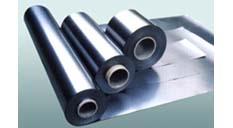
Filled PTFE Article
Kaxite Sealing's Filled PTFE Article offers unmatched durability and chemical resistance for demanding industrial applications. This high-performance sealing solution excels under extreme conditions, reducing downtime and maintenance costs. Its enhanced properties make it ideal for engineers and manufacturers seeking reliable, long-lasting seals. Experience superior performance and peace of mind with Kaxite Sealing's innovative Filled PTFE Article.


