- Home
- About Us
- Products
- Gaskets
- Braided Packing
- Graphite Packing
- Aramid Packing
- PTFE Packing
- Graphite PTFE Packing
- Carbon Fiber Packing
- Asbsetos Packing
- Ceramic Packing
- Fiberglass Packing
- Acrylic Packing
- Cotton Packing
- Injectable Sealant
- Synthetic Fiber Packing
- Vegetable Fiber Packing
- Mineral Fiber Packing
- Molded Packing Ring
- Die-formed Graphite Ring
- Compression Sheets
- Sealing Materials
- Sealing Machines
- Sealing Tools
- Insulation Products
- PTFE
- Metallic Gaskets
- Fep
- PFA
- News
- Download
- Send Inquiry
- Contact Us

OEM Die-formed Graphite Ring from Top Manufacturers in China
The Ultimate Guide to Die-formed Graphite Ring Solutions
In the demanding world of industrial sealing, reliability is non-negotiable. For over four decades, our precision-engineered die-formed graphite ring has set the benchmark for performance in extreme environments. Unlike traditional machined or spiral-wound alternatives, our rings are manufactured through an advanced die-forming process that compresses high-purity, flexible graphite into a homogeneous, void-free structure within precision molds. This results in a sealing component of exceptional consistency, strength, and leak-tight integrity, ready to handle the most challenging applications in chemical processing, refineries, power generation, and aerospace.
The core advantage lies in the process. Die-forming eliminates the inherent weaknesses found in other manufacturing methods, creating a ring with uniform density and mechanical properties throughout its entire cross-section. This translates to superior performance under high temperatures, aggressive media, and cycling pressures where other seals fail.
Technical Specifications & Performance Data
Our die-formed graphite ring is available in a comprehensive range of standard sizes and custom configurations. The following tables detail our core material specifications and performance capabilities.
Standard Material Grades & Properties
| Grade Code | Graphite Purity | Density (g/cm³) | Thermal Conductivity (W/m·K) | Primary Reinforcement | Best For |
|---|---|---|---|---|---|
| DFG-1000 | >99.5% | 1.6 - 1.8 | 80 - 120 (in-plane) | None (Pure) | High-temperature inert gas, vacuum furnaces |
| DFG-2000S | >98% | 1.8 - 2.0 | 70 - 100 | Stainless Steel Foil Laminates | Acids, alkalis, high-pressure steam |
| DFG-3000I | >97% | 1.9 - 2.1 | 60 - 90 | Inconel Alloy Wire/Insert | Oxidizing atmospheres, superheated steam, turbine applications |
| DFG-4000C | >96% | 2.0 - 2.2 | 50 - 80 | Carbon Fiber Weave | High wear applications, aggressive slurries, frequent cycling |
Performance Limits & Environmental Compatibility
| Parameter | Operating Range | Notes / Standard |
|---|---|---|
| Continuous Temperature | -240°C to 3000°F (-400°F to 1650°C)* | *In non-oxidizing atmospheres; Oxidizing limit: 900°F (480°C) with specific grades. |
| Maximum Pressure | Up to 5000 psi (345 bar) | Dependent on cross-section, grade, and gland design. |
| pH Range | 0 - 14 | Chemically inert to most media; exceptions: strong oxidizing agents. |
| Compression Set | <15% (ASTM F36) | Excellent recovery and long-term seal retention. |
| Thermal Cycling Resistance | Excellent | Maintains seal integrity through rapid temperature fluctuations. |
Standard Cross-Sectional Profiles & Dimensions
- Square Section: Available from 1.5mm (1/16") to 12.7mm (1/2"). Most common for static flange seals.
- Rectangular Section: For specialized gland designs. Height to width ratios from 1:1.5 to 1:4.
- Universal Joint Rings: Custom-molded for heat exchanger channels, complex geometries.
- Inner Diameter (ID) Range: 5mm (0.2") to 5000mm (197") and beyond for custom projects.
- Tolerances: Standard cross-section tolerance ±0.1mm (±0.004"). ID/OD machining tolerances to ±0.05mm (±0.002") available.
Critical Advantages Over Alternative Sealing Methods
- Zero Porosity & Homogeneous Structure: The die-forming process ensures a completely uniform density with no laminations, pinholes, or voids that could create leakage paths, a common issue with sheet-based products.
- Superior Mechanical Strength: Higher density and structural integrity provide excellent resistance to blow-out, extrusion, and handling damage compared to spiral-wound or stamped rings.
- Consistent Batch-to-Batch Performance: Precision molding guarantees every ring in a production lot has identical dimensions and properties, ensuring predictable and reliable sealing.
- Custom Geometry without Tooling Cost Prohibition: While offering standard rings, we can produce complex, non-standard cross-sections (e.g., asymmetric, with sealing lips) more economically than machining solid graphite.
- Reduced Installation Risk: The rings are robust and less prone to breaking or twisting during installation compared to fragile, pure graphite rings.
Frequently Asked Questions (FAQ)
What is the fundamental difference between a die-formed graphite ring and a spiral-wound gasket?
A spiral-wound gasket is created by winding alternating layers of graphite tape and metal strip. This creates a laminated structure with potential interstitial leakage paths. A die-formed graphite ring is a single, homogeneous piece of compressed graphite formed in a mold. It has no layers or windings, resulting in a truly monolithic seal with superior leak-tightness, especially for gases and volatile organic compounds.
Can die-formed graphite rings be used in rotating or dynamic applications?
Primarily, they are designed for static sealing applications such as flange faces, heat exchangers, valve bonnets, and manways. For dynamic applications like pump shafts, a different product like a braided or molded graphite packing is recommended. However, certain reinforced grades (like DFG-4000C) can handle slow-rotating or reciprocating motion in specific setups.
How do I select the correct grade for my application involving oxidizing atmospheres above 450°C?
For sustained operation in oxidizing conditions (e.g., air, oxygen-rich streams), you must select an alloy-reinforced grade such as DFG-3000I (Inconel) or DFG-2000S (SS). The metal insert acts as a barrier, significantly reducing the oxidation rate of the graphite substrate. Pure graphite grades (DFG-1000) will oxidize rapidly in such environments and are not suitable.
What are the recommended bolting procedures for installing these rings?
Use a cross-pattern bolting sequence (torquing in multiple progressive steps) to ensure even compression across the flange. Refer to our technical datasheet for recommended initial seating stress (typically 7,000 - 10,000 psi on the ring cross-section). Avoid over-compression, which can crush the ring and reduce its resilience. For critical applications, a stress analysis is advised.
Are these rings suitable for ultra-high vacuum (UHV) systems?
Yes, the DFG-1000 (high-purity) grade is exceptionally well-suited for UHV applications. Its extremely low outgassing rate, high thermal stability, and monolithic structure prevent virtual leaks common in laminated seals. It can be baked out at high temperatures to achieve and maintain vacuum levels down to 10-10 mbar and beyond.
How does the thermal expansion of a die-formed ring compare to metal flanges?
Flexible graphite has a low, anisotropic coefficient of thermal expansion (CTE). Its in-plane CTE is slightly negative, while through-plane is positive but low. This unique property often compensates for the higher CTE of metallic flanges, helping to maintain a consistent sealing stress during thermal cycling, unlike elastomers which expand significantly.
Can you provide rings with controlled electrical conductivity or isolation?
Yes. Standard graphite rings are electrically conductive. If electrical isolation between flanged components is required, we can incorporate insulating layers (e.g., ceramic coatings, mica) onto the ring faces during the manufacturing process. Conversely, we can enhance conductivity with specific treatments if needed for grounding purposes.
What is the typical lead time for custom sizes or non-standard profiles?
For standard ASME B16.20/B16.21 sizes, stock is typically available for immediate shipment. Custom rings (special ID/OD, unique cross-section, or special reinforcement) generally have a lead time of 4-6 weeks, which includes mold fabrication (if needed), production, and quality testing. Expedited services are available for urgent requirements.

- View as

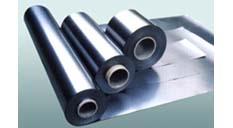
Die-formed Ring
Introducing the Die-formed Ring from Kaxite Sealing, a precision-engineered solution designed for superior sealing performance in demanding industrial applications. Crafted with advanced materials and die-formed technology, it ensures exceptional durability, leak resistance, and reliability, ideal for engineers and manufacturers in sectors like automotive, aerospace, and energy. Experience peace of mind with enhanced efficiency, reduced downtime, and a perfect fit that solves common sealing challenges. Unlike standard options, Kaxite Sealing's ring offers unmatched precision and longevity—trust in quality that elevates your operations to new heights.


