- Home
- About Us
- Products
- Gaskets
- Braided Packing
- Graphite Packing
- Aramid Packing
- PTFE Packing
- Graphite PTFE Packing
- Carbon Fiber Packing
- Asbsetos Packing
- Ceramic Packing
- Fiberglass Packing
- Acrylic Packing
- Cotton Packing
- Injectable Sealant
- Synthetic Fiber Packing
- Vegetable Fiber Packing
- Mineral Fiber Packing
- Molded Packing Ring
- Die-formed Graphite Ring
- Compression Sheets
- Sealing Materials
- Sealing Machines
- Sealing Tools
- Insulation Products
- PTFE
- Metallic Gaskets
- Fep
- PFA
- News
- Download
- Send Inquiry
- Contact Us

Custom PTFE Solutions from a Reliable Chinese Manufacturer for OEM and ODS Requirements
The Ultimate Guide to PTFE: Properties, Applications, and Technical Specifications
For decades, PTFE, or Polytetrafluoroethylene, has stood as a cornerstone of modern engineering and industrial applications. Renowned for its unmatched chemical resistance and exceptional thermal stability, this high-performance fluoropolymer is the material of choice for demanding environments where other substances fail. Its unique molecular structure, characterized by strong carbon-fluorine bonds, grants it a combination of properties that are rarely found together in a single material. From sealing critical joints in chemical plants to enabling non-stick cookware in homes, PTFE's versatility is unparalleled. This guide delves deep into the technical specifications, varied forms, and extensive applications of PTFE, providing engineers, purchasers, and industry professionals with the detailed information necessary for material selection and specification.
Unmatched Material Properties of PTFE
The widespread adoption of PTFE is directly attributable to its exceptional suite of physical and chemical properties. These characteristics make it an indispensable material across countless sectors.
- Extreme Chemical Resistance: PTFE is virtually inert, resisting attack by nearly all industrial chemicals, solvents, and acids, including aggressive substances like aqua regia. This makes it ideal for gaskets, seals, and linings in chemical processing equipment.
- Remarkable Thermal Stability: It maintains its properties across a vast temperature range, typically from -200°C (-328°F) to +260°C (+500°F), with short-term tolerance even higher. This allows for reliable performance in both cryogenic and high-heat applications.
- Excellent Dielectric Properties: PTFE is an outstanding electrical insulator with a very low dielectric constant and dissipation factor, which remain stable across wide frequency and temperature ranges. This is critical for high-frequency and high-performance electronic components.
- Low Coefficient of Friction: Possessing one of the lowest coefficients of friction of any known solid material, PTFE provides superb anti-stick and self-lubricating characteristics, reducing wear in moving parts.
- Non-flammability & Weatherability: PTFE is inherently flame-resistant and does not support combustion. It is also completely resistant to UV radiation and outdoor weathering, ensuring long-term performance without degradation.
- Biocompatibility: Certain grades of PTFE are approved for medical use, as they are non-toxic and do not react with bodily tissues, making them suitable for implants and surgical devices.
Detailed PTFE Product Parameters & Specifications
Our PTFE is manufactured to the highest industry standards, available in various forms including virgin, filled compounds, and fine powders. Below are the key technical parameters for our standard virgin PTFE material.
| Property | Test Method | Typical Value | Unit |
|---|---|---|---|
| Density | ASTM D792 | 2.15 - 2.20 | g/cm³ |
| Melting Point | ASTM D4591 | 327 | °C |
| Continuous Service Temperature | - | -200 to +260 | °C |
| Tensile Strength | ASTM D638 | 25 - 35 | MPa |
| Elongation at Break | ASTM D638 | 300 - 500 | % |
| Coefficient of Friction (Dynamic) | ASTM D1894 | 0.05 - 0.10 | - |
| Dielectric Strength | ASTM D149 | >60 | kV/mm |
| Dielectric Constant (at 1 MHz) | ASTM D150 | 2.1 | - |
| Dissipation Factor (at 1 MHz) | ASTM D150 | < 0.0002 | - |
| Water Absorption | ASTM D570 | < 0.01 | % |
| Limiting PV Value | - | 10,000 | psi·ft/min |
Available Forms and Filled Compounds
To meet diverse application needs, PTFE is supplied in multiple forms. Each form is tailored for specific manufacturing processes and performance requirements.
- Virgin PTFE: Provided as molding powder for compression molding or ram extrusion, or as fine powder for paste extrusion. This is the pure, unmodified polymer.
- Filled PTFE Compounds: To enhance specific mechanical properties, various fillers are added. Common compounds include:
- Glass-Filled PTFE: Improves compression resistance, wear resistance, and stiffness. Typical filler levels: 15%, 25%, 40%.
- Carbon-Filled PTFE: Enhances conductivity (both electrical and thermal), improves wear resistance, and reduces deformation under load.
- Bronze-Filled PTFE: Significantly increases thermal conductivity, compressive strength, and wear resistance, ideal for heavy-duty bearing applications.
- Stainless Steel-Filled PTFE: Provides excellent wear resistance and improved thermal conductivity.
- MoS2 (Molybdenum Disulfide) Filled PTFE: Further reduces friction and increases hardness.
- PTFE Sheet, Rod, and Tube: Semi-finished stock shapes available in a wide range of sizes for machining into custom parts like seals, gaskets, bushings, and insulators.
- PTFE Tape (Thread Seal Tape): A skived or extruded tape used for sealing pipe threads.
- PTFE Dispersions & Coatings: Aqueous dispersions used to apply non-stick, chemically resistant coatings to substrates like metal, glass, or fabric.
PTFE Frequently Asked Questions (FAQ)
Here, we address some of the most common technical and practical questions regarding PTFE material.
What is the primary difference between PTFE and FEP or PFA?
PTFE, FEP (Fluorinated Ethylene Propylene), and PFA (Perfluoroalkoxy) are all perfluorinated polymers with excellent chemical resistance. The key differences are in their melt processability and maximum service temperature. PTFE has the highest continuous use temperature (260°C) but does not melt flow like a true thermoplastic; it must be processed using sintering techniques. FEP and PFA are true thermoplastics that can be melt-processed (e.g., injection molded), but their upper service temperatures are lower (200°C for FEP, 260°C for PFA, similar to PTFE). PFA offers properties closest to PTFE with melt processability.
Can PTFE be used for food contact applications?
Yes, virgin PTFE is generally recognized as safe for food contact in many jurisdictions, including compliance with FDA regulations in the United States under 21 CFR 177.1550 when manufactured according to strict guidelines. It is widely used in non-stick coatings for cookware, baking sheets, and food processing equipment linings. It is critical to ensure that the specific PTFE grade used is certified for food contact and has not been compounded with non-compliant additives.
What are the limitations of PTFE in mechanical design?
While PTFE has outstanding chemical and thermal properties, it has some mechanical limitations designers must consider. It has relatively low tensile strength compared to metals and many other plastics. It exhibits significant cold flow or creep under prolonged load, meaning it can deform over time. Its wear resistance in pure form is moderate but can be greatly improved with fillers like glass, carbon, or bronze. It also has a very high coefficient of thermal expansion, which must be accounted for in assemblies with metal components.
How do I machine parts from PTFE stock shapes?
PTFE is soft and easily machinable using standard metalworking or woodworking tools, though specific techniques yield the best results. Use sharp, high-speed steel or carbide tools. Employ high cutting speeds, slow feed rates, and generous clearance angles to prevent the material from gumming or tearing. Due to its low thermal conductivity, remove heat with an air blast or coolant (if permissible). PTFE generates stringy chips, so effective chip removal is necessary. Parts can be turned, milled, drilled, sawed, and skived with excellent dimensional stability post-machining.
Is PTFE resistant to radiation?
PTFE has relatively poor resistance to high-energy radiation (e.g., gamma rays, electron beams). Exposure to significant radiation doses causes scission of the polymer chains, leading to embrittlement and a drastic reduction in mechanical properties. For applications involving radiation, alternative fluoropolymers with modified chemistries (such as radiation-crosslinkable grades) or other radiation-resistant materials should be evaluated.
What are the key considerations for designing PTFE seals and gaskets?
Successful sealing with PTFE requires attention to several factors. Due to creep, the initial bolt load in a flanged connection will relax; re-torquing after 24 hours of operation is often recommended. Fillers like glass or carbon improve creep resistance. The low modulus of PTFE often necessitates the use of energized seals (like spring-energized PTFE seals) for dynamic applications or low-pressure sealing. Surface finish of the metal counterface is crucial for lip seals; a fine finish (0.2 - 0.8 µm Ra) is typically required for optimal performance and minimal wear.
How does temperature affect the electrical properties of PTFE?
One of PTFE's most valued electrical characteristics is the stability of its dielectric properties over a wide temperature and frequency range. Its dielectric constant remains remarkably stable at around 2.1 from sub-zero temperatures up to its maximum service temperature. Similarly, its dissipation factor (loss tangent) remains extremely low (<0.0005) across this range and up into gigahertz frequencies, making it an ideal choice for precision high-frequency circuits, microwave components, and coaxial cable insulation.
Can PTFE be bonded or welded to itself or other materials?
Bonding PTFE is notoriously difficult due to its non-stick, low-surface-energy nature. It cannot be adhesively bonded using conventional glues without extensive surface pretreatment. Effective methods include sodium naphthalene etching (a chemical process that modifies the surface), plasma treatment, or the use of specialized fluoropolymer adhesives. PTFE cannot be thermally welded like thermoplastics due to its high melt viscosity. Mechanical fastening, press-fitting, or the use of compatible intermediates are common assembly techniques.
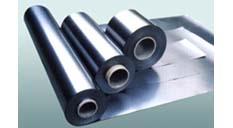

- View as

PTFE Envelope Gasket
Discover Kaxite Sealing's PTFE Envelope Gasket, an innovative sealing solution engineered for durability and reliability in extreme conditions. Crafted from high-quality PTFE, this gasket excels in chemical resistance and temperature stability, making it ideal for industries like oil & gas, pharmaceuticals, and food processing. Its unique envelope design ensures a perfect seal, preventing leaks and reducing downtime. Experience peace of mind with enhanced performance and long-lasting protection. Choose Kaxite Sealing for superior quality that stands out from the competition – your trusted partner in sealing excellence.

Expanded PTFE Sheet
Discover Kaxite Sealing's Expanded PTFE Sheet: a high-performance material engineered for exceptional sealing, insulation, and chemical resistance. Made from expanded PTFE, it offers superior durability and flexibility, ideal for industrial, automotive, and aerospace applications. This sheet solves leak and contamination issues, ensuring reliability and peace of mind. Its unique porous structure provides unmatched breathability and resistance, outperforming standard PTFE options. Experience enhanced efficiency and safety—trust Kaxite Sealing for premium solutions that deliver lasting performance and confidence in demanding environments.

Expanded PTFE Round Cord
Discover Kaxite Sealing's Expanded PTFE Round Cord, a versatile sealing solution crafted from premium expanded PTFE. It excels in reliability, chemical resistance, and durability, making it ideal for industrial and automotive applications. Users experience enhanced performance and peace of mind, knowing it outperforms competitors with superior sealing and longevity. Elevate your projects with this trusted choice.

Expanded PTFE Gasket
Kaxite Sealing's Expanded PTFE Gasket delivers unparalleled sealing performance in harsh industrial environments. Crafted from high-quality expanded PTFE, it ensures leak-proof durability, temperature resistance, and chemical compatibility, ideal for engineers and maintenance professionals. Experience reliable, long-lasting protection that solves leakage issues efficiently. Its unique flexible design outshines standard gaskets, offering easy installation and peace of mind. Trust Kaxite Sealing for superior sealing solutions that enhance safety and efficiency.

Carbon Filled PTFE Rod
Discover Kaxite Sealing's Carbon Filled PTFE Rod, a durable engineering solution designed for high-performance sealing and low-friction applications. It combines PTFE's chemical resistance with carbon's enhanced strength, ideal for industrial machinery, automotive systems, and harsh environments where reliability is key. Feel confident with improved durability and efficiency, setting it apart through superior wear resistance. Upgrade your equipment today for long-lasting, dependable performance!

Molded PTFE Rod
Discover Kaxite Sealing's Molded PTFE Rod, a versatile, high-performance polymer rod ideal for sealing, insulation, and mechanical applications. Crafted from pure PTFE, it offers exceptional chemical resistance, low friction, and durability across diverse environments. Perfect for engineers, industrial users, and DIY enthusiasts in demanding sectors like aerospace, automotive, and electronics, this rod ensures reliability and peace of mind by enhancing efficiency and reducing maintenance. Stand out with superior moldability and consistent quality, all backed by Kaxite Sealing's trusted expertise. Elevate your projects—choose excellence today!


