- Home
- About Us
- Products
- Gaskets
- Braided Packing
- Graphite Packing
- Aramid Packing
- PTFE Packing
- Graphite PTFE Packing
- Carbon Fiber Packing
- Asbsetos Packing
- Ceramic Packing
- Fiberglass Packing
- Acrylic Packing
- Cotton Packing
- Injectable Sealant
- Synthetic Fiber Packing
- Vegetable Fiber Packing
- Mineral Fiber Packing
- Molded Packing Ring
- Die-formed Graphite Ring
- Compression Sheets
- Sealing Materials
- Sealing Machines
- Sealing Tools
- Insulation Products
- PTFE
- Metallic Gaskets
- Fep
- PFA
- News
- Download
- Send Inquiry
- Contact Us

Custom Corrugated Gaskets Manufacturer in China for OEM Solutions
What Are Corrugated Gaskets and Why Are They Essential?
Corrugated gaskets are specialized sealing components designed to provide a reliable, leak-tight seal in high-pressure and high-temperature applications. Characterized by their distinctive concentric corrugated pattern, these gaskets are engineered to handle extreme conditions where standard flat gaskets would fail. The corrugations provide a spring-like effect, allowing the gasket to compensate for thermal expansion, contraction, and flange rotation, maintaining seal integrity under cyclic loading. They are a critical solution in industries where safety, reliability, and performance are non-negotiable, preventing the escape of dangerous or valuable fluids and gases.
Detailed Product Parameters & Specifications
Our corrugated gaskets are manufactured to exacting standards using premium materials and advanced production techniques. Below are the key parameters that define their performance and suitability for your specific application.
Core Material Options
- 304/316 Stainless Steel: Excellent general corrosion resistance. 316 offers superior resistance to chlorides and acids.
- Inconel 600/625: For extreme temperatures and corrosive environments, offering high strength and oxidation resistance.
- Hastelloy C276: Exceptional resistance to pitting, crevice corrosion, and a wide range of aggressive chemicals.
- Titanium: High strength-to-weight ratio and outstanding corrosion resistance, particularly in chloride environments.
- Carbon Steel: A cost-effective option for high-temperature, non-corrosive applications like steam service.
Filler Material Options
- Flexible Graphite: Superior thermal conductivity, excellent sealing at low seating stress, and resistant to most chemicals. Temperature range up to 3000°F (1650°C) in non-oxidizing atmospheres.
- PTFE (Polytetrafluoroethylene): Chemically inert, suitable for highly corrosive media. Temperature range from -400°F to 500°F (-240°C to 260°C).
- Ceramic Fiber: Used for extremely high-temperature applications, often in combination with graphite.
- Non-Asbestos Organic (NAO) Fibers: A general-purpose filler for various oils, water, and steam at moderate temperatures.
Standard Specifications Table
| Parameter | Specification Range | Standard / Notes |
|---|---|---|
| Standard Size Range (Inner Diameter) | 15 mm (1/2") to 1500 mm (60") | Custom sizes available on request |
| Standard Thickness (Metal Core) | 0.25 mm (0.010") to 0.5 mm (0.020") | Thicker cores for higher pressure |
| Overall Gasket Thickness | 1.5 mm (1/16") to 4.5 mm (3/16") | Depends on filler material and number of plies |
| Pressure Rating | Up to 3000 psi (207 bar) | Varies with material, design, and temperature |
| Temperature Rating | -400°F to 3000°F (-240°C to 1650°C) | Dependent on core and filler material combination |
| Corrugation Pitch & Depth | Customizable | Affects spring constant and sealing performance |
| Surface Finishes | Plain, Tin Plated, Silver Plated, Nickel Plated | Plating enhances corrosion resistance and reduces friction |
| Standards Compliance | ASME B16.20, API 6A, DIN, ISO | Manufactured to meet global industry standards |
Design Features & Performance Data
- Multi-Layer Construction: Often feature multiple layers of corrugated metal with filler, creating a robust, resilient seal.
- Controlled Compression: The corrugated design allows for precise control over compression characteristics, ensuring optimal seal with correct bolt load. Excellent Recovery: High resilience allows the gasket to maintain seal during pressure and temperature cycles.
- Low Creep Relaxation: Resists the tendency to lose bolt load over time, critical for long-term reliability.
- Fire Safe Design: Many constructions, especially graphite-filled, meet API 607/API 6FB and ISO 10497 fire test requirements.
Typical Applications of Corrugated Gaskets
The unique properties of corrugated gaskets make them indispensable across a wide spectrum of demanding industries.
- Oil & Gas: Wellheads, Christmas trees, valves, manifolds, and pipeline flanges in upstream, midstream, and downstream operations.
- Petrochemical & Chemical Processing: Reactors, heat exchangers, distillation columns, and piping handling corrosive and volatile chemicals.
- Power Generation: Steam turbines, boilers, feedwater systems, and other high-temperature/pressure utility systems.
- Refining: Critical sealing in crude distillation units, catalytic crackers, and hydrotreaters.
- Marine & Offshore: Engine systems, hydraulic lines, and seawater piping on ships and offshore platforms.
- General Industrial: Any flange connection requiring a robust, reliable seal under challenging conditions.
Advantages Over Alternative Gasket Types
| Gasket Type | Typical Limitations | How Corrugated Gaskets Excel |
|---|---|---|
| Flat Sheet Gaskets (Non-Metallic) | Low pressure/temperature rating, prone to creep and blow-out. | High pressure/temperature capability, excellent creep resistance, and mechanical strength from the metal core. |
| Spiral Wound Gaskets | Can be sensitive to over-compression; filler can be extruded. | More tolerant of flange misalignment and compression variations due to corrugated structure. |
| Solid Metal Gaskets (Ring Type Joints) | Require extremely high bolt loads, can damage softer flanges. | Seal effectively with significantly lower bolt load, protecting flange surfaces. |
| Elastomeric O-Rings | Limited chemical and temperature compatibility. | Vastly superior chemical and extreme temperature resistance with metal/graphite or PTFE construction. |
Corrugated Gaskets: Frequently Asked Questions (FAQ)
Q: What is the primary function of the corrugations in the gasket?
A: The corrugations serve multiple critical functions. Primarily, they act as a series of interconnected springs, providing resilience and allowing the gasket to absorb and compensate for changes in the flange assembly caused by internal pressure, thermal cycling, and vibration. This spring effect maintains a constant sealing stress on the filler material, preventing leaks even during operational fluctuations. The corrugations also create a longer, more tortuous leakage path, significantly enhancing the seal's effectiveness.
Q: How do I select the correct core and filler material for my application?
A: Material selection is based on the chemical and thermal environment of the sealed media. First, identify the chemical composition, concentration, and temperature of the process fluid. For the metal core, choose a material resistant to general corrosion from the atmosphere and any potential external contaminants (like 316 SS for marine environments). The filler must be compatible with the process fluid—graphite for most high-temperature services, PTFE for strong acids and alkalis at lower temperatures. Always consult chemical compatibility charts and consider factors like pH, presence of oxidizers, and temperature extremes.
Q: Can corrugated gaskets be used in standard raised face (RF) flange connections?
A: Yes, corrugated gaskets are exceptionally well-suited for standard raised face (RF) flanges. They are designed to seal on the raised portion of the flange. Their design allows them to conform to minor imperfections on the flange surface. It is crucial to ensure the gasket's outer diameter (OD) fits within the bolt circle and its inner diameter (ID) is not so small as to intrude into the pipe bore, which could cause turbulence or erosion.
Q: What are the recommended bolt tightening procedures for corrugated gaskets?
A: Proper bolt tightening is essential for optimal performance. Always use a calibrated torque wrench and follow a cross-pattern tightening sequence (star pattern) to ensure even compression across the gasket. Tighten in multiple incremental steps (e.g., 30%, 60%, 100% of final torque) to seat the gasket evenly. The target torque value should be based on the gasket manufacturer's recommendation, which considers the gasket design, flange material, and bolt specifications. Avoid over-torquing, as this can crush the corrugations and damage the gasket.
Q: Are corrugated gaskets reusable?
A: Corrugated gaskets are generally not designed for reuse. Once compressed during installation, the metal corrugations and filler material have undergone plastic and elastic deformation specific to that flange assembly. Reusing a gasket can lead to inadequate sealing stress, creep relaxation issues, and a high risk of leakage. For critical service applications, it is always recommended to use a new gasket during any reassembly to ensure seal integrity and safety.
Q: How do corrugated gaskets perform in fire-safe scenarios?
A: Many corrugated gasket constructions, particularly those with flexible graphite filler, are designed to be fire-safe. In a fire, the graphite filler can oxidize, but the multiple layers of corrugated metal core remain intact, creating a physical barrier that maintains a temporary seal and prevents a full-blown jet fire. For applications requiring certified fire-safe performance, specify gaskets that have been successfully tested to recognized standards like API 607, API 6FB, or ISO 10497.
Q: What is the difference between a corrugated gasket and a spiral wound gasket?
A: While both are composite metal and filler gaskets, their construction differs fundamentally. A spiral wound gasket is made by winding pre-formed strips of metal and filler material in a spiral (vortex) pattern. A corrugated gasket starts with a flat metal sheet that is pressed or rolled to form concentric corrugations; the filler material is then inserted into these corrugations. Corrugated gaskets often offer better resilience and recovery in applications with thermal cycling and are less prone to filler extrusion under high pressure.
Q: Can you supply corrugated gaskets with special coatings or plating?
A> Absolutely. We commonly apply various platings to the metal core to enhance performance. Tin plating is standard for carbon steel cores to prevent rusting. Silver or nickel plating is used for stainless steel gaskets in high-temperature applications to prevent galling (cold welding) between the gasket and flange, making disassembly easier and protecting the flange surface. The choice of plating depends on the temperature, media, and service requirements.

- View as

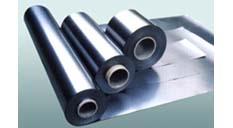
Corrugated Gaskets
Kaxite Sealing Corrugated Gaskets offer unmatched sealing performance with durable materials and innovative design, ensuring leak-free solutions for industrial applications. Ideal for engineers and maintenance professionals, these gaskets provide reliability, reduce downtime, and bring peace of mind. Stand out with superior flexibility and longevity. Trust Kaxite Sealing for quality you can depend on.


