- Home
- About Us
- Products
- Gaskets
- Braided Packing
- Graphite Packing
- Aramid Packing
- PTFE Packing
- Graphite PTFE Packing
- Carbon Fiber Packing
- Asbsetos Packing
- Ceramic Packing
- Fiberglass Packing
- Acrylic Packing
- Cotton Packing
- Injectable Sealant
- Synthetic Fiber Packing
- Vegetable Fiber Packing
- Mineral Fiber Packing
- Molded Packing Ring
- Die-formed Graphite Ring
- Compression Sheets
- Sealing Materials
- Sealing Machines
- Sealing Tools
- Insulation Products
- PTFE
- Metallic Gaskets
- Fep
- PFA
- News
- Download
- Send Inquiry
- Contact Us

Custom Gasket Materials Manufacturer Solutions
Understanding Gasket Materials: A Comprehensive Guide
The selection of the correct Gasket Materials is a critical decision in engineering and maintenance, directly impacting the safety, efficiency, and longevity of a system. A gasket acts as a static seal, placed between two or more mating surfaces to prevent leakage of fluids or gases under compression. The performance of this simple component hinges entirely on the material from which it is made. With over two decades of experience in field applications and material science, this guide provides an in-depth look at the parameters, properties, and considerations essential for specifying the optimal gasket material for any application.
Core Functions and Material Requirements
Before delving into specific materials, it's crucial to understand what a gasket must endure. The primary function is to create a leak-tight seal. To achieve this, the gasket material must possess a combination of properties:
- Compressibility & Recovery: The material must deform under bolt load to fill surface imperfections (compressibility) and maintain seal pressure if the joint relaxes (recovery).
- Creep Relaxation Resistance: The ability to resist gradual loss of sealing force over time under constant temperature and pressure.
- Chemical Compatibility: It must withstand exposure to the sealed media (acid, alkali, solvent, oil, steam) without degrading, swelling, or corroding.
- Temperature Resistance: The material must maintain its sealing integrity across the operational temperature range, from cryogenic levels to extreme heat.
- Pressure Resistance: It must withstand the internal pressure of the system without extruding into the flange gap or blowing out.
- Physical Strength: Adequate tensile strength and density to handle flange stress and mechanical handling during installation.
Major Categories of Gasket Materials
Gasket materials can be broadly classified into three main categories, each with its sub-types and ideal use cases.
1. Non-Metallic Materials
These are often composite sheets made from fibers, elastomers, and fillers bound by polymers. They offer excellent compressibility and sealing at lower pressures and temperatures.
| Material Type | Key Composition | Max Temp (°C/°F) | Pressure Range | Typical Applications | Chemical Resistance Notes |
|---|---|---|---|---|---|
| Compressed Non-Asbestos (CNA) / Aramid Fiber | Aramid fibers (e.g., Kevlar), nitrile rubber, fillers | 290°C / 554°F | Medium | General industrial piping, water, steam, mild chemicals | Good for oils, fuels, water, moderate acids/bases. Not for strong oxidizers. |
| Compressed Asbestos-Free (CAF) / Fiber | Glass, carbon, or cellulose fibers with NBR/SBR binder | 205°C / 401°F | Low to Medium | Water, air, fuel oil, general purpose sealing | Varies by fiber; glass offers good chemical resistance. |
| PTFE (Polytetrafluoroethylene) | Pure PTFE or filled compounds (glass, graphite) | 260°C / 500°F | Low to Medium | Aggressive chemicals, pharmaceuticals, food processing | Excellent, inert to almost all chemicals. Prone to cold flow. |
| Graphite (Flexible) | Exfoliated graphite, often with stainless steel inserts | 450°C+ / 842°F+ (in non-oxidizing) | High | Heat exchangers, boiler manways, high-temp flanges | Excellent except strong oxidizers (nitric acid, hot sulfuric). Requires oxidation protection. |
| Elastomeric (Rubber) Sheets | NBR, EPDM, FKM (Viton), Silicone, Neoprene | Varies by polymer (80°C-230°C) | Low | Pump covers, housings, water pipelines, automotive | Highly specific: NBR for oils, EPDM for steam/ozone, FKM for aggressive fluids. |
2. Semi-Metallic Materials
These combine a metal core or skeleton for strength with a soft, conformable sealing element. They bridge the gap between soft gaskets and solid metal gaskets.
| Material Type | Construction | Max Temp (°C/°F) | Pressure Range | Typical Applications | Key Advantages |
|---|---|---|---|---|---|
| Spiral Wound Gaskets (SWG) | Alternating layers of pre-formed metal strip (SS304, 316, Inconel) and filler (graphite, PTFE, mica). | Depends on metal/filler (Up to 815°C/1500°F with graphite) | Very High | ASME B16.5/16.47 flanges, Refineries, Chemical plants, High-Pressure Steam | Excellent resilience and recovery, handles thermal cycling, wide pressure/temp range. |
| Metal Jacketed Gaskets | A soft filler (asbestos-free, graphite) fully enclosed in a metal jacket (soft iron, SS, Monel). | 500°C / 932°F | High | Heat exchangers, vessel openings, high-pressure services | Protects filler from erosion/blow-out, good for uneven flange surfaces. |
| Kamprofile Gaskets | Solid metal core with serrated (grooved) faces, often coated with soft sealant (graphite, PTFE). | Limited by coating (Up to 650°C/1200°F with flexible graphite) | Very High | Critical high-pressure services, offshore platforms, large diameters | High bolt load efficiency, minimal creep relaxation, excellent for cyclic service. |
3. Metallic Materials
Solid metal gaskets are used for the most demanding high-pressure, high-temperature applications. They require very high bolt loads and perfectly machined flange surfaces.
- Ring Type Joint (RTJ) Gaskets: Machined from soft iron, carbon steel, or alloys (SS316, Inconel 625). They seal via metal-to-metal contact in a groove. Used in API 6A and ASME B16.5/16.47 for pressures exceeding 15,000 psi.
- Flat Metal Gaskets: Simple rings of soft aluminum, copper, or stainless steel. Used for heat exchangers, vacuum applications, and where non-contaminating seals are needed.
- Lens Gaskets: Convex-shaped metal gaskets for high-pressure chemical and petrochemical applications.
Critical Product Parameters for Specification
When selecting a gasket material, engineers must evaluate the following key parameters against the operating conditions. These are typically found in material datasheets.
| Parameter | Definition & Standard (e.g., ASTM) | Why It Matters | Typical Values/Examples |
|---|---|---|---|
| Density / Specific Gravity | Mass per unit volume (ASTM F1315). | Indicates material compactness. Higher density often correlates with better blow-out resistance and fluid resistance. | CNA Sheets: 1.6 - 2.0 g/cm³; Flexible Graphite: 1.0 - 1.1 g/cm³. |
| Tensile Strength | Force required to break a material sample (ASTM F152). Measured in MPa or psi. | Measures mechanical strength and handling durability. Important for high-pressure applications. | CNA: 8-12 MPa; PTFE Sheet: 15-25 MPa. |
| Compressibility | Percentage reduction in thickness under a specific load (ASTM F36). | Determines how well the material conforms to flange imperfections. Too high can lead to over-compression. | 15-25% at a defined stress (e.g., 70 MPa). |
| Recovery | Percentage of thickness regained after compression load is released (ASTM F36). | Critical for maintaining seal during thermal cycles, pressure surges, or flange movement. | 40-60% is typical for good quality sheet materials. |
| Creep Relaxation | Percentage loss of initial sealing stress over time under constant temperature (ASTM F38). | High creep leads to seal failure over time. Vital for long-term, hot applications. | <20% after 24h at rated temperature is desirable. |
| Sealing Stress / Load | The minimum flange pressure (MPa or psi) required to achieve a seal. | Must be matched to available bolt load of the flange connection. Exceeding max stress can crush the gasket. | Graphite: Low (20-40 MPa); PTFE: Medium (40-60 MPa); Spiral Wound: High (70+ MPa). |
| pH Range & Fluid Compatibility | Defines the acidity/alkalinity and specific chemicals the material can resist. | Ensures the material will not chemically degrade, swell, or contaminate the process fluid. | PTFE: pH 0-14; EPDM: Good for alkaline, poor for oils; FKM: Excellent for hydrocarbons, acids. | Thermal Conductivity | Rate of heat transfer through the material. | Important for heat exchanger applications. Graphite has high conductivity; PTFE is an insulator. | Flexible Graphite: High (W/m·K); PTFE: Very Low. |
Gasket Materials: Frequently Asked Questions (FAQ)
What is the most important factor when choosing a gasket material?
The single most critical factor is chemical compatibility. The gasket material must be entirely resistant to the medium it seals, across the full operating temperature range. A material that degrades, swells, or dissolves will fail regardless of its other excellent properties. Always consult chemical compatibility charts from the material manufacturer first.
What is the difference between Compressed Non-Asbestos (CNA) and Compressed Asbestos-Free (CAF) materials?
While both are asbestos-free, CNA specifically uses aramid fibers (like Kevlar) as the primary reinforcement, offering higher temperature and pressure capabilities. CAF is a broader term for sheets using other synthetic fibers like glass or cellulose. CNA is generally considered a higher-performance material, while CAF serves well in standard industrial applications.
Why is PTFE a popular choice, and what are its limitations?
PTFE is prized for its near-universal chemical inertness and low friction. It is suitable for extremely corrosive services and clean processes like food and pharmaceuticals. Its primary limitations are a tendency to cold flow (creep under pressure) and a relatively lower maximum temperature (~260°C) compared to graphite or metals. Filled PTFE compounds (with glass, carbon, or bronze) are used to reduce cold flow.
When should I use a spiral wound gasket over a soft cut gasket?
Use spiral wound gaskets for higher pressure and temperature applications (typically ASME Class 300 and above), for services with significant thermal cycling, or for critical process lines where reliability is paramount. Use soft cut gaskets (from sheet materials) for lower pressure/temperature services (Class 150, 300 for some materials), water, air, and general utility lines where cost-effectiveness is key.
What causes a gasket to fail prematurely?
Common causes include: 1) Chemical attack/incompatibility, 2) Over-compression (crushing the gasket, reducing its recovery), 3) Under-compression (insufficient bolt load to affect a seal), 4) Incorrect gasket material for the temperature, 5) Flange surface finish too rough or too smooth, 6) Flange misalignment or warpage, and 7) Improper installation (e.g., reusing old gaskets, not cleaning surfaces).
How do I determine the correct gasket thickness for my application?
Thickness selection balances sealability and robustness. Thinner gaskets (1.5mm) offer higher resistance to creep and blow-out but require flatter flange surfaces. Thicker gaskets (3mm) can compensate for more flange distortion or surface irregularities but may be more prone to creep. For standard raised face flanges, 1.5mm is common. Always follow OEM or industry standard (ASME, API) recommendations for specific equipment.
What is the significance of the gasket's recovery percentage?
Recovery indicates the material's ability to spring back after the compressive load is reduced. High recovery is vital in applications with frequent thermal cycles or pressure fluctuations. As the flange bolts and pipe expand/contract, the clamping force changes. A material with good recovery will maintain the seal by expanding to fill the space as the joint loosens momentarily, preventing leaks.
Can I reuse a gasket?
It is strongly discouraged to reuse any gasket, especially non-metallic and semi-metallic types. During initial installation, the material compresses and deforms to match the specific flange imprint. Once removed, it has lost its original resilience and seal-forming capability. Reusing it will almost certainly result in a leak path. Always install a new gasket during any disassembly.

- View as

PTFE Tape For SWG
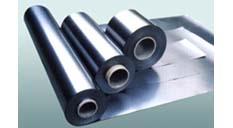
Kaxite Sealing presents PTFE Tape for SWG, a premium sealing solution crafted to ensure leak-proof connections in plumbing and piping systems. Made from high-quality PTFE material, it offers superior durability, easy application, and resistance to corrosion, making it ideal for professionals and DIY enthusiasts tackling home repairs or industrial projects. Experience peace of mind with reliable, long-lasting performance that sets it apart through exceptional quality and trusted brand assurance.

V Shape Metallic Tape
Kaxite Sealing's V Shape Metallic Tape offers a durable, self-adhesive sealing solution for quick fixes and professional applications. Made from high-quality metal, it excels in weatherproofing, insulation, and repair, ideal for DIY enthusiasts and contractors in construction, automotive, and home settings. Its unique V shape design ensures easy application and long-lasting performance, providing peace of mind and reliability. Elevate your projects with this superior tape that outshines conventional options.

Spool Metallic Strip For SWG
Kaxite Sealing's Spool Metallic Strip For SWG offers durable, high-quality sealing for industrial applications. Its robust material ensures long-lasting performance, ideal for professionals in manufacturing and engineering. This product solves leakage issues efficiently, providing reliable solutions with superior craftsmanship. Enhance your projects with our unique metallic strip—trust Kaxite Sealing for precision and excellence. Experience unmatched durability and peace of mind today!

Metallic Strip
Kaxite Sealing's Metallic Strip offers superior durability and sleek design for sealing projects. Its premium materials ensure long-lasting performance, ideal for DIY enthusiasts and professionals seeking reliable, easy-to-use solutions in home or industrial settings. Experience enhanced efficiency and peace of mind with this standout product that combines quality with affordability.

Spun Kevlar Yarn
Kaxite Sealing presents Spun Kevlar Yarn, an ultra-durable solution for high-strength applications. Engineered for industries demanding reliability, it offers superior heat resistance, unmatched toughness, and seamless integration. Ideal for aerospace, automotive, or industrial use, it ensures safety and peace of mind. Stand out with Kaxite's innovative technology for lasting performance—transform your projects today.

Spun Nomex Yarn
Kaxite Sealing introduces Spun Nomex Yarn, a durable, heat-resistant textile ideal for industrial applications like protective clothing and insulation. Its key advantages include exceptional resilience, safety in high-temperature environments, and comfort through advanced spinning technology. Perfect for engineers, manufacturers, and safety professionals in sectors such as automotive and aerospace, it offers peace of mind by reducing risks and enhancing performance. Unlike standard yarns, Spun Nomex Yarn provides reliable protection with consistent quality—experience the Kaxite Sealing difference in your next project.


