- Home
- About Us
- Products
- Gaskets
- Braided Packing
- Graphite Packing
- Aramid Packing
- PTFE Packing
- Graphite PTFE Packing
- Carbon Fiber Packing
- Asbsetos Packing
- Ceramic Packing
- Fiberglass Packing
- Acrylic Packing
- Cotton Packing
- Injectable Sealant
- Synthetic Fiber Packing
- Vegetable Fiber Packing
- Mineral Fiber Packing
- Molded Packing Ring
- Die-formed Graphite Ring
- Compression Sheets
- Sealing Materials
- Sealing Machines
- Sealing Tools
- Insulation Products
- PTFE
- Metallic Gaskets
- Fep
- PFA
- News
- Download
- Send Inquiry
- Contact Us

High-Quality Copper Gaskets Supplier for Customized Bulk Solutions
What Are Copper Gaskets?
Copper gaskets are sealing components manufactured from high-purity copper or copper alloys. Renowned for their exceptional thermal conductivity, malleability, and corrosion resistance, these gaskets are engineered to create a reliable, pressure-tight seal between two mating surfaces. They are primarily used in applications involving high temperatures, high pressures, and demanding environments where softer gasketing materials would fail. The inherent softness of copper allows it to conform to minor imperfections on flange faces, ensuring a superior seal. Industries such as automotive, aerospace, power generation, oil & gas, and high-performance engineering rely heavily on the consistent performance of Copper Gaskets for critical systems.
Key Advantages and Applications
The selection of copper as a gasket material is driven by a unique combination of physical and chemical properties:
- Superior Thermal Conductivity: Efficiently dissipates heat, preventing localized hot spots and thermal degradation, making them ideal for cylinder heads, exhaust systems, and heat exchangers.
- Excellent Malleability (Conformability): Annealed copper easily flows under compression to fill surface irregularities, creating a gas-tight or liquid-tight seal even on less-than-perfect flange finishes.
- High Temperature Resistance: Maintains structural integrity and sealing capability at continuous operating temperatures exceeding 500°C (932°F), depending on the alloy.
- Corrosion Resistance: Resists oxidation and corrosion from many chemicals, steam, and fuels, ensuring long-term reliability in harsh environments.
- Non-Magnetic and Non-Sparking: Essential for applications in electrical systems, MRI machines, and explosive atmospheres.
- Reusability: While often used as single-use crush gaskets, certain types (like solid copper ring gaskets) can be reused if within specified tolerances.
Primary Applications Include: Engine cylinder heads (head gaskets), exhaust manifolds, turbocharger fittings, oil & gas pipeline flanges (ring-type joint gaskets), industrial boilers, transformer covers, vacuum systems, and fuel injection systems.
Technical Specifications and Product Parameters
Our copper gaskets are manufactured to exacting standards, with specifications tailored to meet diverse industrial requirements. Below are the critical parameters that define our product range.
Material Grades and Composition
We utilize several standardized copper alloys to balance performance factors like strength, annealing temperature, and corrosion resistance.
| Alloy Designation | Common Name | Primary Composition | Key Properties | Typical Applications |
|---|---|---|---|---|
| C11000 | Electrolytic Tough Pitch (ETP) Copper | Cu 99.9%, O2 0.04% | Excellent conductivity, malleability, standard grade. | General purpose gaskets, electrical components. |
| C10100 / C10200 | Oxygen-Free Copper (OFC) | Cu 99.99%+ | Highest purity, superior ductility and corrosion resistance, no oxygen embrittlement. | High-vacuum systems, critical aerospace seals. |
| C12200 | Phosphorus-Deoxidized Copper (DHP) | Cu 99.9%, P 0.02% | Excellent brazability and welding properties, good hot formability. | Gaskets for brazed assemblies, heat exchangers. |
| C17200 / C17300 | Beryllium Copper | Cu, Be 1.7-2.0%, Co/Ni | Very high strength, hardness, fatigue resistance, good conductivity. | High-pressure static seals, spring-loaded gaskets. |
Standard Gasket Types and Dimensions
Our manufacturing capabilities cover a wide array of gasket profiles. Tolerances are per ASME B16.20 (Ring Joint Gaskets) and ASME B16.21 (Non-Metallic Flat Gaskets for metal surfaces) or customer-specific drawings.
| Gasket Type | Profile Description | Standard Size Range | Thickness Range | Sealing Principle |
|---|---|---|---|---|
| Flat Sheet Gasket | Cut from sheet stock, can be plain or with bolt holes. | ID 10mm to 2000mm+ | 0.5mm to 3.0mm (0.020" to 0.125") | Full-face compression sealing. |
| Ring Gasket (Solid Ring) | Rectangular or oval cross-section solid ring. | Standard ANSI B16.5 Flange Sizes (1/2" to 24") | Varies by pressure class (e.g., R/RX series: ~5mm-10mm width) | Line contact, high-pressure sealing. |
| Ring-Type Joint (RTJ) Gasket | Octagonal or oval cross-section for grooved flanges. | ANSI B16.5, B16.47, API 6A Specs | Defined by R, RX, BX ring numbers | Metal-to-metal wedge effect in a groove. |
| Spiral Wound with Copper Filler | V-shaped metal strip (stainless steel) wound with copper as the filler. | All standard flange sizes and ratings. | Standard 3.2mm, 4.5mm, 6.0mm (0.125", 0.175", 0.250") | Combined resilience of winding and softness of copper filler. | Jacketed Gasket (Copper Jacket) | Soft filler material (e.g., graphite) enclosed in a thin copper jacket. | Custom to flange dimensions. | 1.5mm to 3.0mm jacket thickness | Corrosion protection for filler, improved temperature resistance. |
Performance Data
- Temperature Range: Cryogenic to +600°C (1112°F) for pure copper; specific alloys may vary.
- Pressure Rating: Suitable for vacuum and pressures exceeding 10,000 psi (690 bar) for RTJ types, dependent on design.
- Hardness (Annealed): Typically Rockwell B 40-60 (Pure Copper). Beryllium Copper can be heat treated to Rockwell C 38-45.
- Thermal Conductivity: ~400 W/m·K for pure copper (C10100).
- Coefficient of Thermal Expansion: ~17.0 x 10⁻⁶/°C (20-300°C).
- Recommended Surface Finish: Flange surface finish of 125 to 250 µin Ra (3.2 to 6.3 µm Ra) is typically adequate for proper sealing.
Copper Gaskets: Frequently Asked Questions (FAQ)
Q: When should I choose a copper gasket over a graphite or rubber gasket?
A: Choose a copper gasket for applications involving very high temperatures (above 450°C/840°F), high pressures, or where excellent thermal conductivity is required. They are also chosen for their non-flammability and resistance to hydrocarbons and steam. Use graphite for wider chemical compatibility at high temps but where conductivity isn't key, and rubber for lower temperature/pressure applications requiring high elasticity.
Q: Are copper gaskets reusable?
A: This depends on the type. Solid copper ring gaskets (like RTJ gaskets) are designed as crush gaskets and are generally considered single-use because the deformation creates the seal. Flat sheet gaskets that are not overly compressed may be reusable if carefully removed and inspected for flattening, cracks, or scoring. Reuse is not recommended for critical sealing applications unless specified by the OEM.
Q: How do I determine the correct hardness (temper) for my copper gasket?
A: The temper is crucial. Annealed (soft) copper is most common for gaskets as it conforms best. For applications requiring more structural support or where bolt load might cause excessive extrusion, a half-hard or hard temper might be specified. The flange design, bolt torque, and required sealing force dictate the ideal temper. Consult engineering specifications or our technical team for guidance.
Q: How do I properly install a copper gasket to prevent leaks?
A: 1. Ensure both flange surfaces are clean, dry, and free of old gasket material, nicks, or warping. 2. Verify the gasket type and size matches the flange. 3. Do not use sealants or lubricants on the gasket faces unless specifically required (e.g., for anti-galling). 4. Align the gasket carefully. 5. Use a cross-pattern torque sequence to tighten bolts gradually to the specified torque value. This ensures even compression and prevents distortion. 6. For high-temperature systems, a re-torque after an initial heat cycle is often necessary.
Q: What causes a copper gasket to fail?
A: Common failure modes include: Over-compression: Can cause the copper to extrude into bolt holes or the bore, weakening the seal. Under-torquing: Insufficient load fails to create an adequate seal. Flange Misalignment: Creates uneven pressure. Excessive Temperature: Can anneal the gasket further or cause oxidation/creep if beyond limits. Chemical Attack: From ammonia, sulfur compounds, or oxidizing acids not compatible with copper. Fatigue: From thermal cycling or vibration.
Q: Can copper gaskets be used with stainless steel flanges?
A: Yes, copper gaskets are frequently used with stainless steel, carbon steel, and other alloy flanges. However, galvanic corrosion (bi-metallic corrosion) is a potential concern in the presence of an electrolyte (moisture, chemicals). In such environments, it is advisable to consult corrosion tables. The large anode (gasket) to cathode (flange) area ratio generally makes the risk manageable in many dry or high-temperature services, but it should be evaluated for critical long-term applications.
Q: What is the difference between R, RX, and BX style ring-type joint gaskets?
A: These are standardized profiles for high-pressure sealing. R-style rings are octagonal or oval and seat in corresponding grooves; they are standard. RX-style rings are pressure-energized, with a modified cross-section that provides a tighter seal at higher pressures and can be interchangeable within similar sizes. BX-style rings are used specifically for API 6A wellhead and Christmas tree equipment, with a pressure-energized design for extreme pressures and have strict size-for-size matching (no interchangeability).
Q: Do you offer custom-shaped copper gaskets?
A: Absolutely. We specialize in manufacturing custom copper gaskets from supplied CAD drawings, samples, or precise specifications. This includes non-standard geometries, specific alloy requirements, unique thicknesses, and special features like tabs, alignment holes, or coatings.
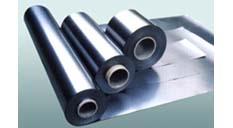

- View as

Copper Head Gasket
Kaxite Sealing's Copper Head Gasket offers superior sealing with its durable copper core, ideal for automotive engines. It enhances performance and reliability, preventing leaks and ensuring a smooth ride—trusted by mechanics and enthusiasts alike for its unmatched quality and lasting peace of mind.
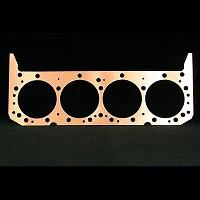
Copper Head Gasket
Upgrade your engine with the Copper Head Gasket from Kaxite Sealing—designed for peak performance. This premium gasket, crafted from durable copper, ensures a secure, leak-free seal in high-temperature environments, perfect for automotive enthusiasts and professional mechanics. Its superior design prevents overheating and enhances engine longevity, providing peace of mind with every drive. What sets it apart is Kaxite's precision engineering for unmatched reliability, making it the smart choice for a smoother, more efficient ride. Choose Kaxite Sealing today and experience the difference in durability and performance.
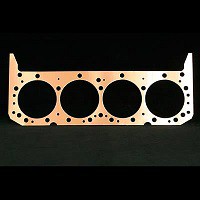
Copper Head Gasket
Upgrade your engine with the Copper Head Gasket by Kaxite Sealing, a durable solution for superior heat resistance and sealing. Crafted from high-quality copper, it ensures optimal performance and longevity, ideal for automotive enthusiasts and mechanics tackling demanding conditions. Feel the confidence of a leak-free, efficient engine, offering unmatched reliability over standard gaskets. Trust Kaxite Sealing for precision engineering that powers your drive forward.

Copper Head Gasket
Kaxite Sealing’s Copper Head Gasket is a premium sealing solution for engines, designed to withstand extreme temperatures and pressure. Its durable copper construction ensures a tight, reliable seal, preventing leaks and enhancing engine performance. Ideal for automotive enthusiasts, mechanics, and DIY users in demanding repair or high-performance scenarios, this gasket delivers peace of mind with superior durability. Unlike standard alternatives, it excels in heat resistance and longevity, solving common sealing failures. Trust Kaxite Sealing for quality—experience enhanced efficiency and reliability in your vehicle today.

Solid Copper Gasket
Kaxite Sealing's Solid Copper Gasket offers superior durability and sealing efficiency for industrial applications. Ideal for engineers and professionals in high-pressure environments, it ensures reliable performance, lasting protection, and peace of mind, setting a benchmark with its premium, corrosion-resistant copper design.

Copper Exhaust Gasket
Kaxite Sealing's Copper Exhaust Gasket ensures superior sealing for automotive exhaust systems. Crafted from durable copper, it offers exceptional heat resistance and a tight fit, preventing leaks and enhancing engine performance. Ideal for car enthusiasts and mechanics, this gasket provides reliability in harsh conditions, delivering peace of mind and smoother rides. Its unique copper construction outperforms standard materials, ensuring long-lasting durability. Upgrade your vehicle with Kaxite Sealing for unmatched quality and performance.


